Seminyak Village Oberoi Street: Complete Visitor Guide
Seminyak Village is a compact shopping, dining, and lifestyle destination on Jalan Kayu Jati No. 8, in the Oberoi area of Seminyak, Badung, Bali. It is positioned as a curated stop for Balinese gifts, fashion and lifestyle retail, cafés, restaurants, and wellness services. Its central location makes it useful during a walk through the Kayu Aya–Jalan Oberoi dining and shopping district, but the venue is a separate property from Seminyak Square, the Seminyak Flea Market, and the individual boutiques along the surrounding streets.
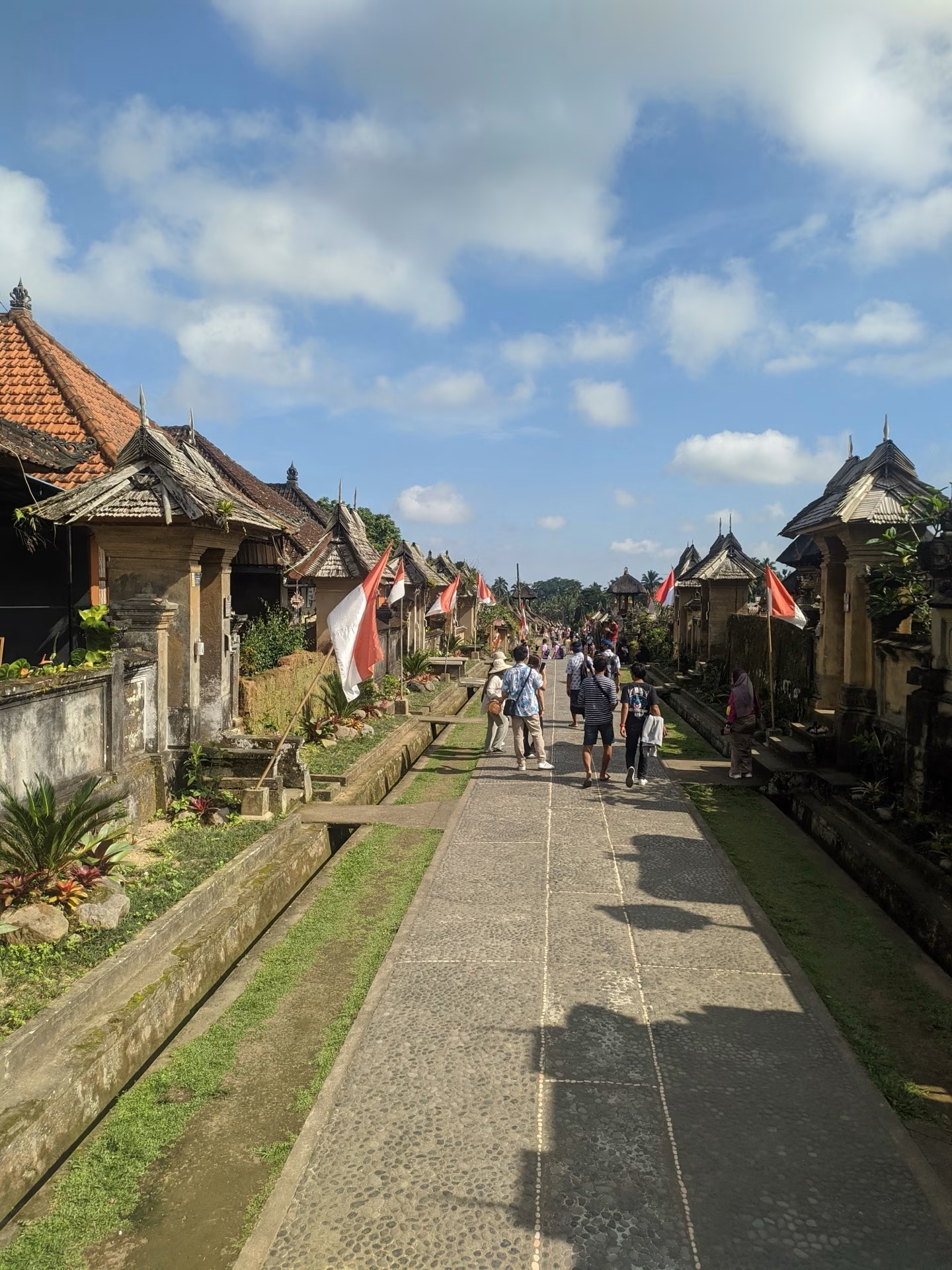
This open-license image illustrates the boutique and lifestyle character of the Seminyak area; it is not a claim that the pictured shop is inside Seminyak Village. Photo by rishi, used under the Unsplash License. View source.
The official Seminyak Village website currently lists everyday opening hours of 10:00 AM–10:00 PM. Tenant schedules can differ: the official listing gives BAKED as 7:00 AM–10:00 PM and Spring Spa as 10:00 AM–7:00 PM. Confirm the individual outlet before making a special trip because retail, food, and wellness hours may change.
What You Can Find at Seminyak Village
Seminyak Village is organised around a mix of concept stores, food and beverage venues, and lifestyle services rather than a large department-store format. The venue’s official directory highlights Open House, a concept focused on Balinese tradition and oleh-oleh, and Bali Collective, a marketplace-style retail concept. The exact tenants, product selection, and promotions can change, so use the current on-site directory instead of relying on an old list of brands.
Shoppers may find gifts, fashion, accessories, resort-oriented products, home and lifestyle items, and locally inspired souvenirs. Compare materials, sizing, care instructions, and prices before buying. “Bali-inspired” does not automatically mean locally made, so ask staff about provenance when craftsmanship or origin matters to you.
Shopping for Balinese Gifts and Oleh-Oleh
Seminyak Village can be convenient for visitors who want a comfortable, central place to browse gifts without travelling to a traditional market. Look for packaged food with clear labels, expiry dates, and ingredient information; for textiles, check fibre content and washing instructions; and for handicrafts, ask whether the item is handmade, locally sourced, or a mass-produced souvenir.
Prices in Seminyak’s lifestyle district often reflect location, presentation, curation, and air-conditioned retail space. If you are comparing value, also visit a traditional market or craft village—but do not assume that every item is directly comparable. Be respectful when photographing products and ask before photographing artisans, staff, or other shoppers.
Dining and Coffee
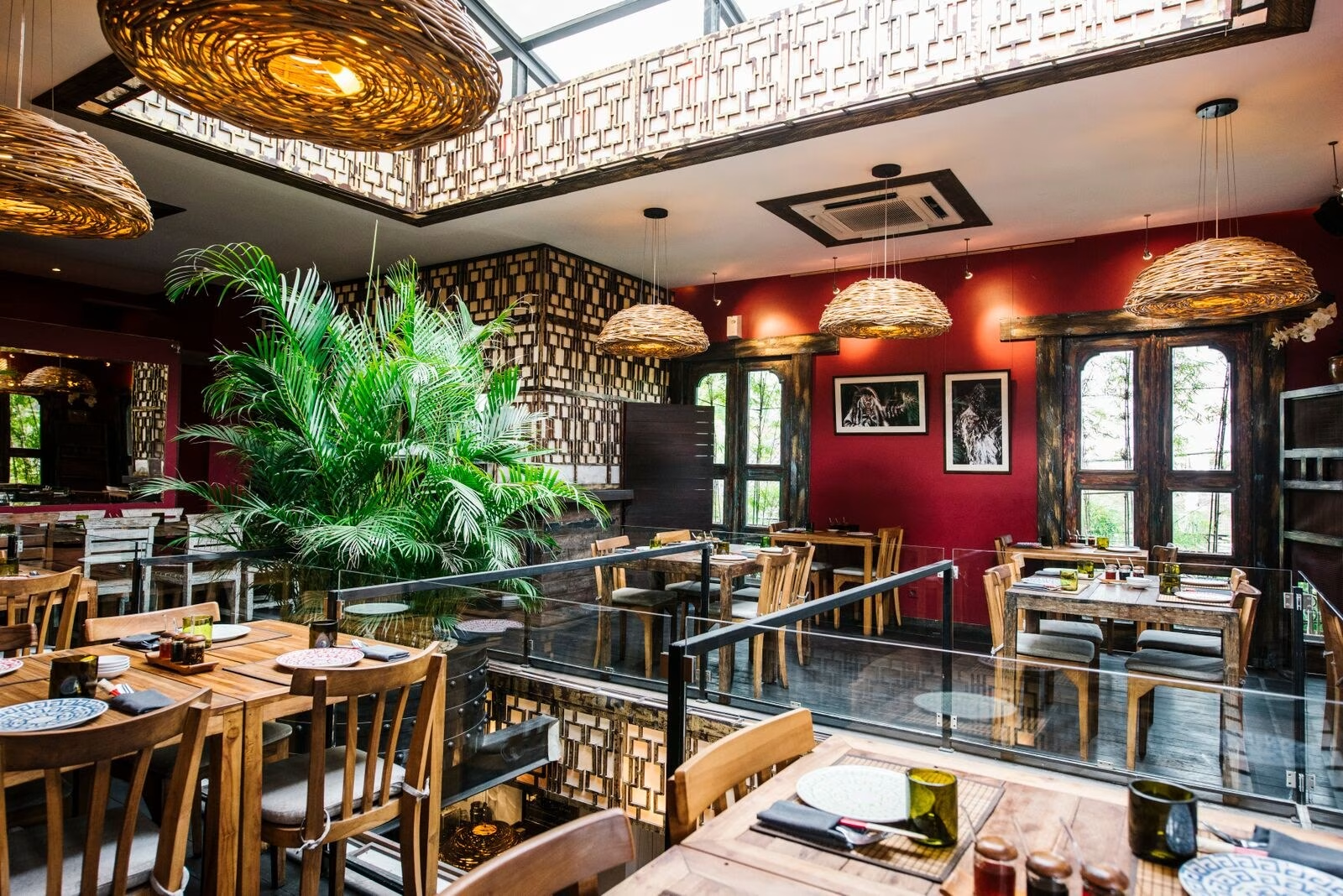
Dining and café culture are an important part of the Oberoi area; this is a Seminyak context image rather than a specific Seminyak Village outlet. Photo by Pontus Ohlsson, used under the Unsplash License. View source.
Seminyak Village’s official website lists BAKED and Barbarossa among its food and beverage offerings. BAKED covers bakery and café-style service, while Barbarossa presents Mediterranean-influenced breakfast, lunch, and dinner. Menus, dietary options, reservations, seating, and kitchen hours can change. Ask directly about allergies and cross-contamination rather than relying only on a menu label.
Dining here works well as a break between shopping stops or as part of an evening on Jalan Kayu Aya. At busy times, allow for a wait and check whether a venue accepts reservations, cards, or contactless payment. Prices vary by outlet and should be checked on the current menu.
Wellness and Lifestyle Services
Spring Spa is listed by the official venue as a tenant with separate operating hours. Spa treatments, availability, prices, treatment duration, therapist schedules, and booking requirements can change. Confirm the treatment menu and final price before starting, and disclose relevant health conditions to the therapist.
Location on Jalan Kayu Jati and Oberoi
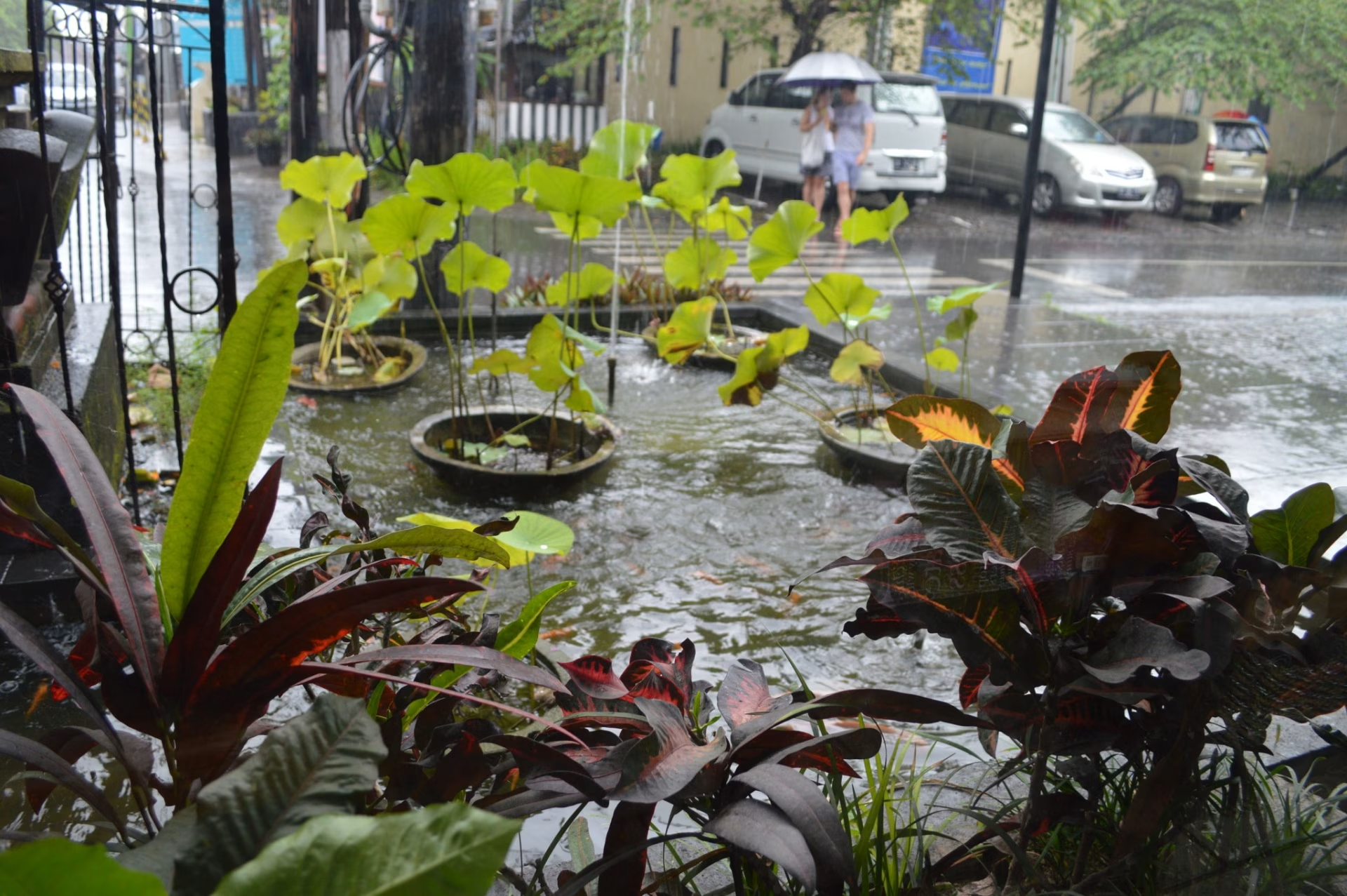
Jalan traffic can be busy around Seminyak; plan your crossing and drop-off rather than stopping in the road. Photo by sophie peng, used under the Unsplash License. View source.
Seminyak Village is on Jalan Kayu Jati, a short distance from Jalan Kayu Aya, which is also widely called Jalan Oberoi or Eat Street. This is one of Seminyak’s most concentrated areas for restaurants, cafés, boutiques, villas, spas, and nightlife. The name “Oberoi Street” can refer to the wider district and not only one road segment, so give drivers the venue’s full name and Jalan Kayu Jati No. 8.
The destination coordinate used for this page is approximately -8.68326, 115.15690, matching the Seminyak Village map feature at No. 8 Jalan Kayu Jati. Use the live route for the current entrance and drop-off point because traffic flow and access restrictions can change.
Getting There and Parking
Walking is practical if you are already staying in central Seminyak or visiting Seminyak Square, but tropical heat, narrow pavements, road crossings, and evening traffic can make the walk slower than the map suggests. Taxis, private drivers, and ride-hailing services are common. Arrange a clear pickup point because a driver may not be able to wait directly at the busiest frontage.
Parking availability and drop-off arrangements should be confirmed locally. Do not block shop entrances, residential lanes, or temple access. Motorbike riders should use designated parking and wear a helmet; visitors should keep valuables secure in crowded traffic and shopping areas.
Best Time to Visit
Come in the morning for a quieter browse and easier parking, or in the late afternoon to combine shopping with dinner. The main venue is currently listed until 10:00 PM, but individual stores and kitchens may close earlier. Weekends, public holidays, peak travel periods, and rainy evenings can bring more traffic and longer waits.
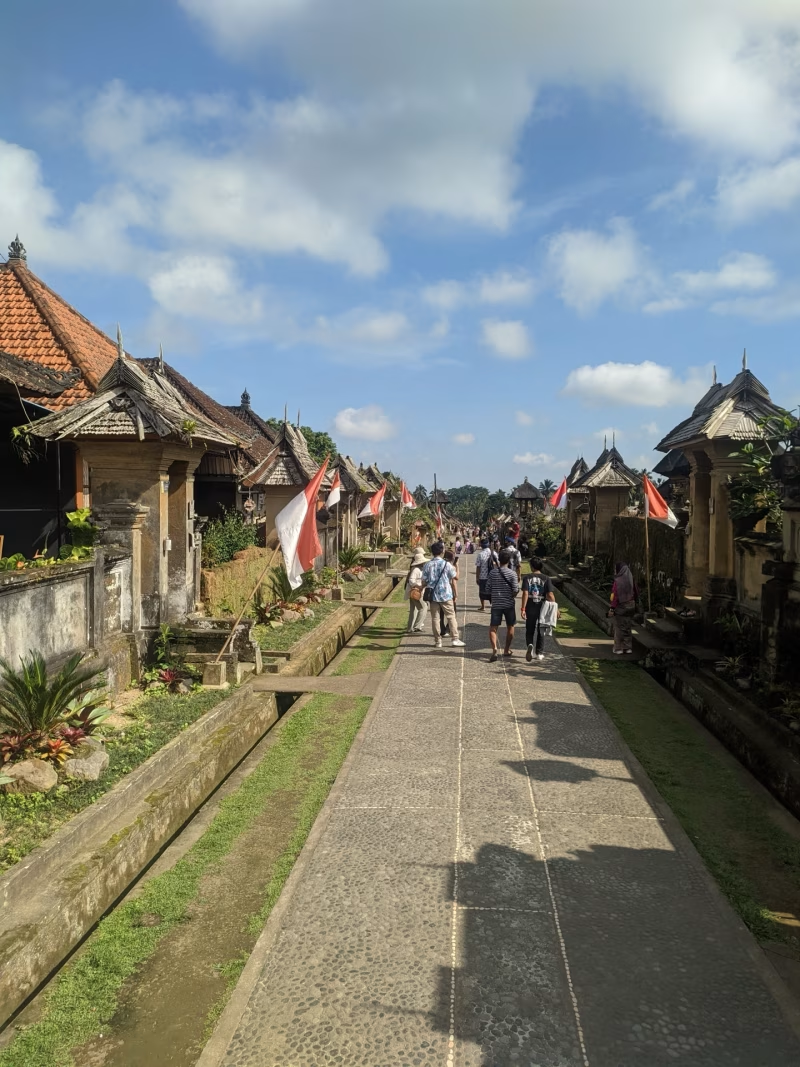
Seminyak’s west-coast setting makes a beach or sunset stop a natural addition to an Oberoi itinerary; this is a nearby-area context image. Photo by Gus Dark, used under the Unsplash License. View source.
Leave time to walk between Seminyak Village, Seminyak Square, nearby boutiques, and the beach rather than trying to cover the district by car at peak hour. If sunset is part of the plan, check the weather and allow enough time for traffic on the return route.
Seminyak Village Compared with Nearby Shopping Spots
Seminyak Village is a curated lifestyle complex. Seminyak Square is a nearby shopping and dining destination with its own tenants and operating schedule. The Seminyak Flea Market is a separate open-air souvenir stop, while Jalan Kayu Aya and the wider Oberoi area contain independent boutiques and restaurants. Sukawati Art Market and Ubud Art Market offer different traditional-market experiences and are much farther away.
Choose Seminyak Village for convenience, air-conditioned browsing, dining, and a central location. Choose a traditional market for a more informal environment and broader bargaining culture. Neither setting guarantees authentic local production for every item; ask questions and inspect quality.
Practical Tips and Responsible Shopping
Carry a reusable bag, keep receipts for higher-value purchases, and check return or exchange rules before paying. Use card payments only through the venue’s approved terminal, count change, and protect passports and phones. For food gifts, ask about transport and storage requirements before placing them in checked luggage.
Respect local residents, staff, religious spaces, and other guests. Dress appropriately when entering temples or passing ceremonial areas, keep noise down near homes, and do not photograph people without permission. Support businesses that communicate product origin clearly and treat workers, makers, and animals responsibly.
Seminyak Village FAQ
Where is Seminyak Village?
It is at Jalan Kayu Jati No. 8, Seminyak, Kuta, Badung, Bali 80361, in the Oberoi area.
What time does Seminyak Village open?
The official website currently lists the main venue daily from 10:00 AM to 10:00 PM. Some tenants have separate hours.
What can I buy there?
The complex includes concept stores, Balinese gift and oleh-oleh options, fashion and lifestyle retail, and other curated shopping products. Tenant ranges change.
Is Seminyak Village the same as Seminyak Square?
No. They are separate nearby destinations with different tenants and schedules.
How long should I spend there?
Allow around one to two hours for a relaxed browse and coffee; add more time if you plan to dine or book a spa treatment.
What are the exact coordinates?
The map position used here is approximately -8.68326, 115.15690. Confirm the live route and entrance before travelling.
Reviews reflect our overall Bali tour service quality.
5.0
from 24 Google reviews
RussiaKudo90
Google Review
5
I’m happy to leave this review because I know Made personally, and I can honestly say he’s one of the best guides and kindest people you’ll meet in Bali.
What makes him special isn’t just his deep knowledge of the island – though that alone is impressive. He knows all the hidden gems, the best times to visit popular spots, and always has interesting stories behind every temple and rice terrace. But more than that, he genuinely cares about the people he’s with. He doesn't treat it like a job; he treats it like he's showing his own friends around his home.
I’ve seen how he goes out of his way to make sure everything runs smoothly, how he checks in on comfort and safety, and how he handles any little issue with a smile. He's reliable, patient, and incredibly warm-hearted. If you're looking for someone who will not only show you beautiful places but also make you feel welcome and looked after – Made is your guy.
I truly hope this comment helps him, because he absolutely deserves more recognition. Thank you, Made, for being the amazing person and guide that you are! 🙏🇮🇩
A month ago
Leah Davidson
Google Review
5
The Best Tour Guide in Bali!
We honestly couldn’t recommend Made enough! From start to finish, he was absolutely fantastic and went above and beyond to make our trip around Bali so special.
Before we even arrived, Made’s communication was amazing. He helped us plan our whole trip, gave us fantastic advice and recommendations, and really took the time to understand what we wanted to see and do. He made everything so easy and stress-free for us.
Throughout our trip, Made looked after us incredibly well. He picked us up, took us to all the different places we wanted to visit, and even showed us some amazing places we probably wouldn’t have found ourselves. His knowledge of Bali is incredible — he knew so much about every place we visited and was always happy to explain things and answer our questions.
What really stood out to us was how kind, caring and genuine Made was. He didn’t just feel like a tour guide; we genuinely felt like we were being looked after by a friend. He always made sure we were comfortable, safe and enjoying ourselves, and nothing ever felt like too much trouble.
Everyone in his team was also absolutely fantastic. They were friendly, professional and made us feel so welcome throughout our trip.
Made played such a huge part in making our Bali holiday so memorable. If you’re looking for someone who is reliable, knowledgeable, kind and genuinely cares about giving you the best possible experience, we would 100% recommend him.
Thank you so much, Made, for looking after us and helping us have such an amazing time in Bali. We’ll definitely be recommending you to anyone visiting Bali — and hopefully we’ll see you again one day! ❤️🇮🇩
A month ago
Max Maxvik
Google Review
5
Excellent, the driver is responsible, punctual, drives well, knows a lot of places to relax, the sights of Bali, speaks Russian, English and Chinese well.
A month ago
Софья Меркулова
Google Review
5
Очень советую Мади в качестве гида. Он организовывал нам тур на Нусу Пениду, у него много друзей, который организуют вам все что угодно за очень выгодную плату. Мади очень дружелюбный и улыбчивый человек, он знает русский язык, поэтому с ним можно разговаривать и узнавать многое про Бали. Я его всем советую в первую очередь, он может показать вам весь остров и организовать туры на другие соседние острова и вулканы. Спасибо ему большое, нам очень понравилось с ним проводить время. Советуем вам выбрать именно его за его труд, старания и доброжелательность
Мади, спасибо тебе ❤️
7 months ago
GEDE BMTHAMV
Google Review
5
Thanks a lot
8 months ago
Валерия Келейникова
Google Review
5
Thank you for a great day in Ubud, Madi 🙏🏻 We really enjoyed our cozy and interesting trip)
A year ago
Р М
Google Review
5
No written review.
A year ago
Bakhtiyar Azagov
Google Review
5
Thank you for hospitality! We enjoy our travel in Bali with you
Excatly Mr Burteh! He is best tour guide and driver in Bali. Mr Murteh is local, thats why he has to much information about Bali
Perfect
A year ago
Elena Toroshniak
Google Review
5
Нам повезло, что знакомы с Маде. Это самый добрый и искренний человек на Бали
A year ago
Vit Mit
Google Review
5
Путешествие на Бали – это всегда погружение в мир красоты, духовности и уникальной культуры. Но по-настоящему раскрыть душу острова, прочувствовать его магию можно только с опытным и увлеченным проводником. Нам в этом невероятно повезло – мы встретили Маде!
Маде – не просто гид, он настоящий хранитель традиций и наследник балийской культуры. Он открыл нам не только знаменитые достопримечательности, но и тайные уголки острова, поделился своими знаниями о древних обычаях и верованиях. Благодаря Маде мы смогли:
* Почувствовать энергетику священных храмов: Маде рассказал нам об истории и значении каждого храма, помог правильно провести церемонии и почувствовать связь с духовным миром Бали.
* Погрузиться в атмосферу балийской деревни: мы побывали в гостях у местных жителей, познакомились с их бытом, попробовали традиционные блюда и даже приняли участие в мастер-классах по ремеслам.
* Насладиться природными красотами: Маде показал нам живописные рисовые террасы, вулканы, водопады и секретные пляжи, где можно было отдохнуть от шума и суеты.
Но самое главное – Маде подарил нам незабываемые эмоции, искреннее общение и теплоту. Он отвечал на все наши вопросы, учитывал наши пожелания и создавал атмосферу настоящего приключения.
Мы безгранично благодарны Маде за это удивительное путешествие! Он помог нам открыть для себя настоящий Бали – остров Богов, красоты и гармонии. Если вы планируете поездку на Бали, обязательно обратитесь к Маде – он сделает ваше путешествие незабываемым!
A year ago
Галина Бардымова
Google Review
5
Мадэ очень классный, дружелюбный и общительный, интересно рассказывает)
Ждет когда нужно, в общем, очень приятный) рекомендую
Можно обо всем договориться) если будет дождь, он сопровождает с зонтиком)
A year ago
Инна Звездина
Google Review
5
Спасибо большое, мы объехали за один день все прекрасные пляжи 😍
Остались очень довольны и будем рекомендовать друзьям 🙏🏻✨
A year ago
ЖАННА
Google Review
5
Хотим от всего сердца поблагодарить нашего гида Маде. Наше путешествие по Бали было незабываемо! Благодаря вам мы познакомились с этой чудесной страной! Нас не только возили по районам, но и рассказывали историю Бали❤️ мы чувствовали себя в полной безопасности и полную заботу о нас. Благодарим и до встречи вновь на Бали🫶🏻
A year ago
Карина Ревазян
Google Review
5
Veryyyy good
A year ago
Влад Хайбулин
Google Review
5
No written review.
A year ago
細野佳代子
Google Review
5
No written review.
A year ago
Alex Alex
Google Review
5
Очень рекомендую этого русскоговорящего балийца! 👍 Экскурсии с ним - это просто супер! 🤩 Он не только рассказывает интересные факты об острове и показывает самые красивые места, но и делится местными фишками, о которых не прочитаешь в путеводителях. 😉 Он очень внимательный и отзывчивый, с ним легко и приятно общаться.
2 years ago
Евгений Ширшин
Google Review
5
Маде добряк!) очень внимательный, и профессиональный гид! Уже много лет дружим с ним! Провез по всем уголкам прекрасного Бали! Хорошо говорит на русском и английском языках! Аккуратно водит машину! Очень адекватные цены на экскурсии!! Знает все вкусные и красивые места! Поможет со всеми вопросами на Бали, такие как аренда скутера, или аренда жилья! Встретит и проводит в аэропорт, если вы с ребенком то у Маде прекрасные дочки которые с удовольствием побуду няней!))
Всем рекомендую это агенство!!
2 years ago
Сергей Милых
Google Review
5
No written review.
2 years ago
Denise
Google Review
5
Made did an amazing job as a guide!
Comfortable pick-up & drop-off, safe driving, very friendly & helpful, explained a lot while driving & visiting the spots. He knows a lot and is happy to answer any questions! He also brought local fruits for testing! Amazing day, thank you so much! 🙏🏼🫶🏼🧡
2 years ago
Stijn Heerze
Google Review
5
Really nice and kind guide. Knows a lot about Bali. Also a very good driver.
2 years ago
Juliette Bos
Google Review
5
Very nice driver, good communication and good service. Perfect!
2 years ago
Nengah Negare
Google Review
5
This company is the best, good driver and pofesional guide, i am very enjoy visiting Bali island 👍👍👍
2 years ago
Ni Kadek Kardiasih
Google Review
5
Sakuraba give me best service treveling in bali. Thakyou very much for guide bali sakuraba
2 years ago
Visit Seminyak Village Oberoi Street with a Trusted Bali Guide
Tell us your travel dates, group size, and any special requests — we'll plan a seamless private tour that includes Seminyak Village Oberoi Street and more of Bali's best.