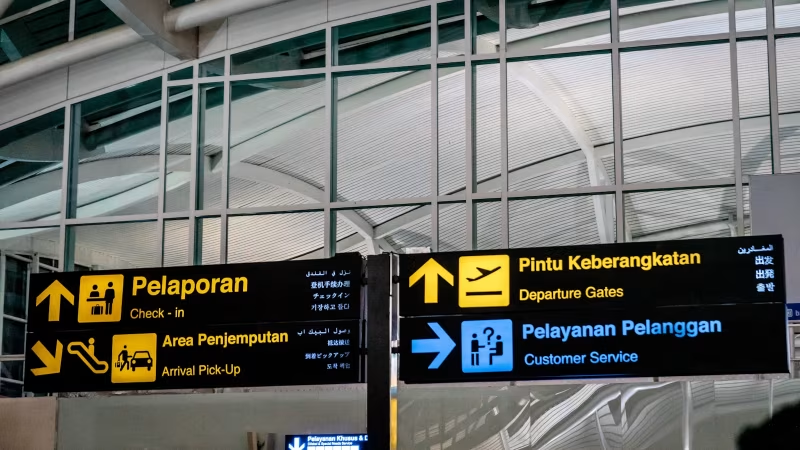
What Is the Bali Tourism Levy?
Since February 14, 2024, every international visitor to Bali has been required to pay a one-time tourism levy of IDR 150,000, roughly USD 10. The fee, officially called the Bali Provincial Tourism Levy, is separate from your visa cost and from any hotel or accommodation tax, and it goes toward environmental protection, cultural preservation, and tourism infrastructure across the island.
The requirement and payment process can change, so use the current provincial guidance below rather than relying on old travel posts or informal advice.
What Visitors Should Check Before Travelling
The provincial government describes this as a levy for foreign tourists and publishes the amount, payment channels, and exemption process through Love Bali. Requirements, payment access, and enforcement instructions can change, so check the official FAQ before departure and keep the electronic voucher or payment confirmation available.
How to Pay the Bali Tourist Levy the Right Way
The official payment website is the Bali provincial government's Love Bali portal. The official FAQ also lists registered payment endpoints such as hotels, travel agents, and tourist attractions. Use the portal or a registered endpoint, and be cautious with unverified third-party links that are not listed by the provincial government.
The process itself is short: enter your passport number, full name, email, and arrival date, then pay online. Love Bali sends a levy voucher with a QR code to the email entered during payment. Keep the voucher available and follow the current instructions from the provincial authorities. If you would rather not do it in advance, you can also pay at dedicated counters at the airport or seaport when you land, though paying online beforehand means one less line to stand in after a long flight.
| Method | When | Payment Options |
|---|
| Love Bali website (official) | Before you arrive | Credit cards, bank transfer, virtual account, and QRIS, subject to the options shown in Love Bali |
| Airport or seaport counter | On arrival | Cashless payment methods available on-site |
The levy is charged once per visit, per person, and covers your entire stay regardless of length. Cruise operators can also submit group payments for up to 500 passengers at once using a spreadsheet template through the same official system, according to the official Love Bali FAQ.
Who Is Exempt From the Levy?
Per the official FAQ, a small number of traveler categories do not need to pay: diplomatic and official visa holders, transportation crew, KITAS and KITAP holders (Indonesia's limited and permanent stay permits), and family unification and student visa holders, subject to the required supporting documentation. Golden visa and other visa categories should follow the Love Bali application process where the official FAQ requires it; do not assume an automatic exemption without checking the current guidance. Everyone else visiting for tourism purposes is expected to pay.
Keep Separate Charges Separate
The provincial tourism levy is separate from visa costs, accommodation or restaurant charges, and destination-specific entrance fees. If your itinerary includes a location with its own ticketing or conservation charge, confirm that fee with the relevant operator or authority rather than assuming it is included in the provincial levy.
For current payment channels, exemptions, and voucher help, use the official Love Bali FAQ.
Frequently Asked Questions
What happens if I don't pay the tourist levy?
Requirements and enforcement guidance can change. International visitors should confirm the current levy requirement and pay through Love Bali or a registered endpoint before or during arrival rather than relying on assumptions about enforcement.
Is the tourist levy the same as the hotel tax?
No. The IDR 150,000 levy is a one-time, per-person provincial tourism levy paid through the official Love Bali system. Hotel and restaurant taxes are separate charges built into your accommodation and dining bills, paid by the businesses themselves, not by you directly.
Do I need to pay again if I leave Bali and come back?
Yes. The levy covers a single visit. If you leave Indonesia and return on a new trip, it needs to be paid again.
Can I pay for my whole group at once?
Individual travelers pay per person through the standard Love Bali flow. Cruise operators have a separate group-submission process for up to 500 passengers per booking.
Do Indonesian citizens have to pay the tourist levy?
No. The official Love Bali system describes the fee specifically as a levy on "foreign tourists," and Indonesian citizens are not part of that category. If you are traveling with Indonesian family members or friends, the levy only applies to the non-Indonesian travelers in the group.
What if I lose my QR code voucher?
The official Love Bali site has a dedicated voucher lookup tool at lovebali.baliprov.go.id where you can retrieve a voucher you already paid for. It is worth saving a screenshot of your payment confirmation as a backup as well, in case you need to show proof before your voucher is retrieved.
Is the levy refundable if I cancel my trip?
The official system does not publish a refund policy, so the safest assumption is that payment is final once processed. If your travel dates are not fully confirmed yet, it is worth paying closer to your departure date rather than far in advance.
Final Thoughts
The Bali tourism levy is a one-time IDR 150,000 charge per foreign tourist under the current provincial guidance. Confirm the latest amount, payment channel, and exemption requirements through Love Bali before travelling, and keep the payment voucher available.
If you are planning a trip and want help with the logistics beyond the levy, from airport pickup to a full custom itinerary, you can reach out through our Custom Trip planning page and we will help you put together a smooth, well-timed Bali itinerary.
Last updated September 2026. Source: the official Love Bali FAQ and current Bali provincial regulations. Fees and rules can change; always confirm current requirements at lovebali.baliprov.go.id before you travel.