
GEDE BMTHAMV
Google Review
No written review.
5 months ago
Bali's rice terraces are a UNESCO-recognised cultural landscape shaped over centuries by the traditional subak irrigation system — a cooperative water management philosophy intertwined with Hindu spirituality. The emerald cascades of Tegallalang near Ubud and the sweeping UNESCO-listed panoramas of Jatiluwih in the highlands are among the island's most photographed and beloved destinations.
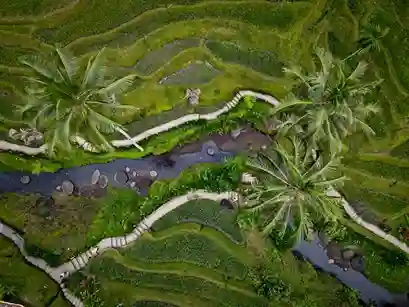
Both are spectacular but different. Tegallalang (near Ubud) is more accessible with swings and cafés but busier. Jatiluwih (UNESCO, West Bali highlands) is more expansive, serene, and less crowded — ideal if you want an authentic landscape experience.
Yes — the subak irrigation system keeps the terraces green throughout the year. The shade varies with the rice cycle (bright neon after planting, golden before harvest) but they are always photogenic.
Yes at both Tegallalang and Jatiluwih. At Tegallalang you can walk down into the valley; at Jatiluwih there are well-marked walking trails ranging from 1 to 7 km. Comfortable shoes recommended.
Entry fees at Tegallalang vary by section (Rp 15,000–50,000). Swing and photo activity tickets are extra (from Rp 100,000). Our tour packages include all standard entry fees.
Absolutely — Tegallalang is just 20 minutes from Ubud centre and combines perfectly with the Ubud Market, Monkey Forest, Tirta Empul, and Kintamani Volcano in a single full-day tour.
Reviews reflect our overall Bali tour service quality
GEDE BMTHAMV
Google Review
No written review.

Валерия Келейникова
Google Review
Thank you for a great day in Ubud, Madi 🙏🏻 We really enjoyed our cozy and interesting trip)

P M
Google Review
No written review.

Vit Mit
Google Review
Путешествие на Бали – это всегда погружение в мир красоты, духовности и уникальной культуры. Но по-настоящему раскрыть душу острова, прочувствовать его магию можно только с опытным и увлеченным проводником. Нам в этом невероятно повезло – мы встретили Маде! Маде – не просто гид, он настоящий хранитель традиций и наследник балийской культуры. Он открыл нам не только знаменитые достопримечательности, но и тайные уголки острова, поделился своими знаниями о древних обычаях и верованиях. Благодаря Маде мы смогли: * Почувствовать энергетику священных храмов: Маде рассказал нам об истории и значении каждого храма, помог правильно провести церемонии и почувствовать связь с духовным миром Бали. * Погрузиться в атмосферу балийской деревни: мы побывали в гостях у местных жителей, познакомились с их бытом, попробовали традиционные блюда и даже приняли участие в мастер-классах по ремеслам. * Насладиться природными красотами: Маде показал нам живописные рисовые террасы, вулканы, водопады и секретные пляжи, где можно было отдохнуть от шума и суеты. Но самое главное – Маде подарил нам незабываемые эмоции, искреннее общение и теплоту. Он отвечал на все наши вопросы, учитывал наши пожелания и создавал атмосферу настоящего приключения. Мы безгранично благодарны Маде за это удивительное путешествие! Он помог нам открыть для себя настоящий Бали – остров Богов, красоты и гармонии. Если вы планируете поездку на Бали, обязательно обратитесь к Маде – он сделает ваше путешествие незабываемым!

ЖАННА
Google Review
Хотим от всего сердца поблагодарить нашего гида Маде. Наше путешествие по Бали было незабываемо! Благодаря вам мы познакомились с этой чудесной страной! Нас не только возили по районам, но и рассказывали историю Бали❤️ мы чувствовали себя в полной безопасности и полную заботу о нас. Благодарим и до встречи вновь на Бали🫶🏻

Влад Хайбулин
Google Review
No written review.

Alex Alex
Google Review
Veryyyy goodОчень рекомендую этого русскоговорящего балийца! 👍 Экскурсии с ним - это просто супер! 🤩 Он не только рассказывает интересные факты об острове и показывает самые красивые места, но и делится местными фишками, о которых не прочитаешь в путеводителях. 😉 Он очень внимательный и отзывчивый, с ним легко и приятно общаться.2025-02-18

Stijn Heerze
Google Review
Really nice and kind guide. Knows a lot about Bali. Also a very good driver.
Share your travel dates, group size, and interests — we'll design a personalised private tour that brings you face to face with Bali's most beautiful rice terraces destinations.