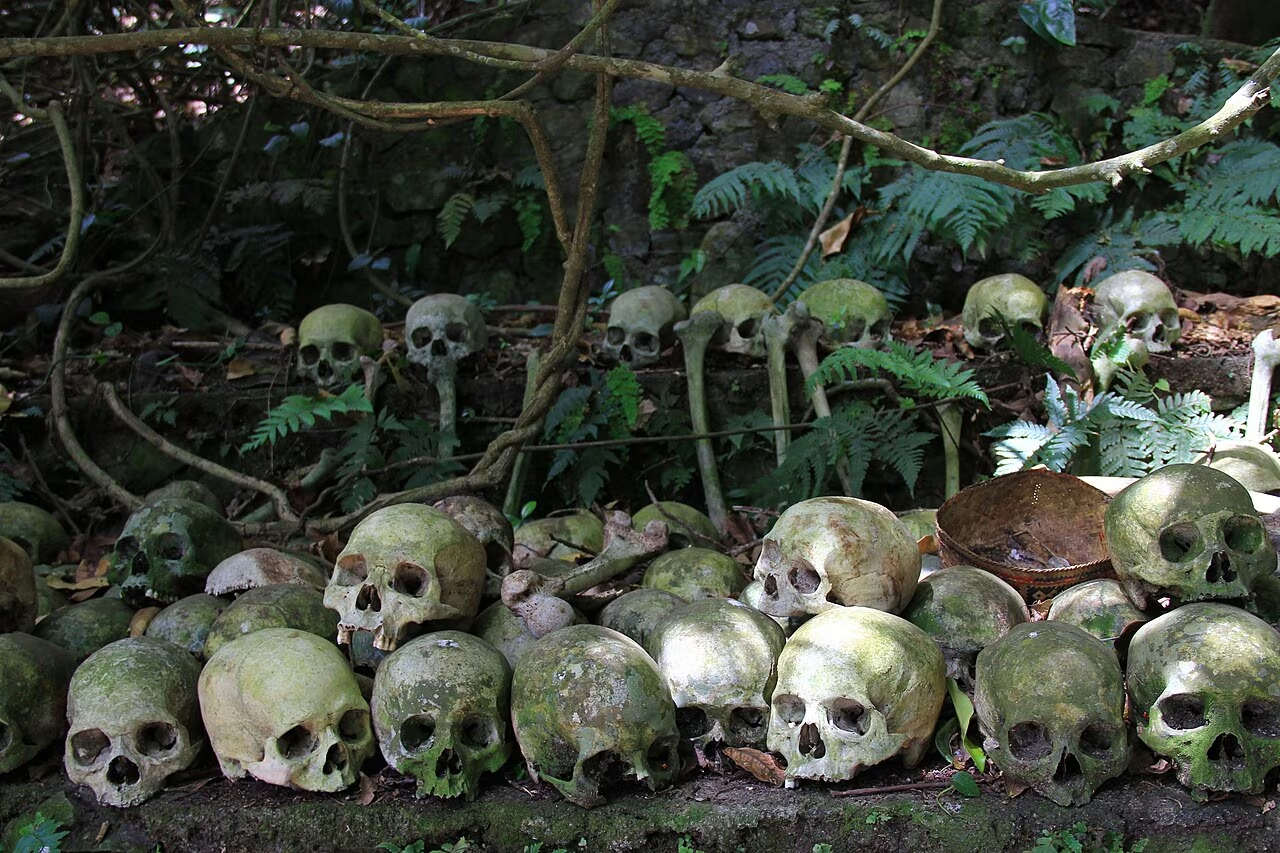
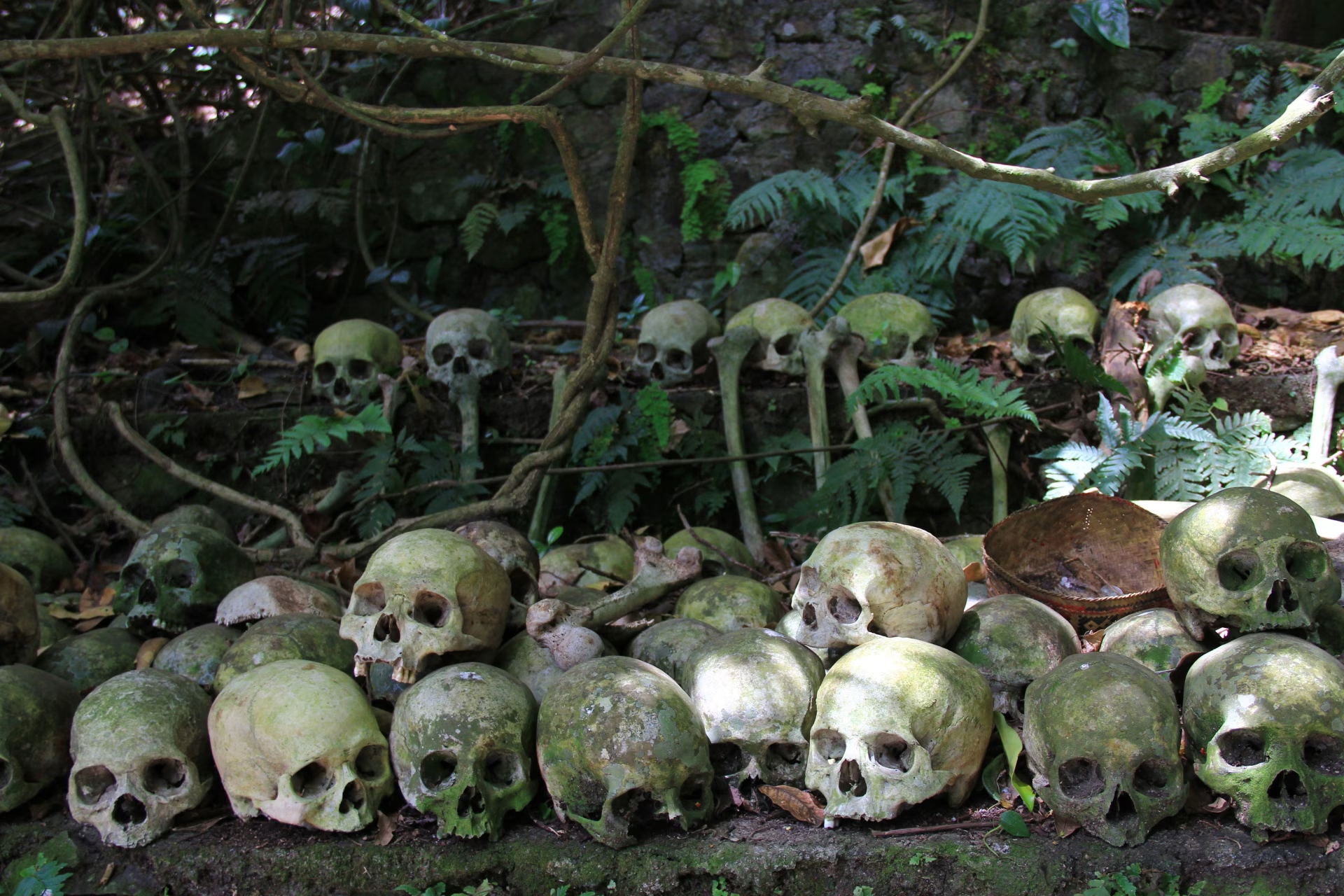
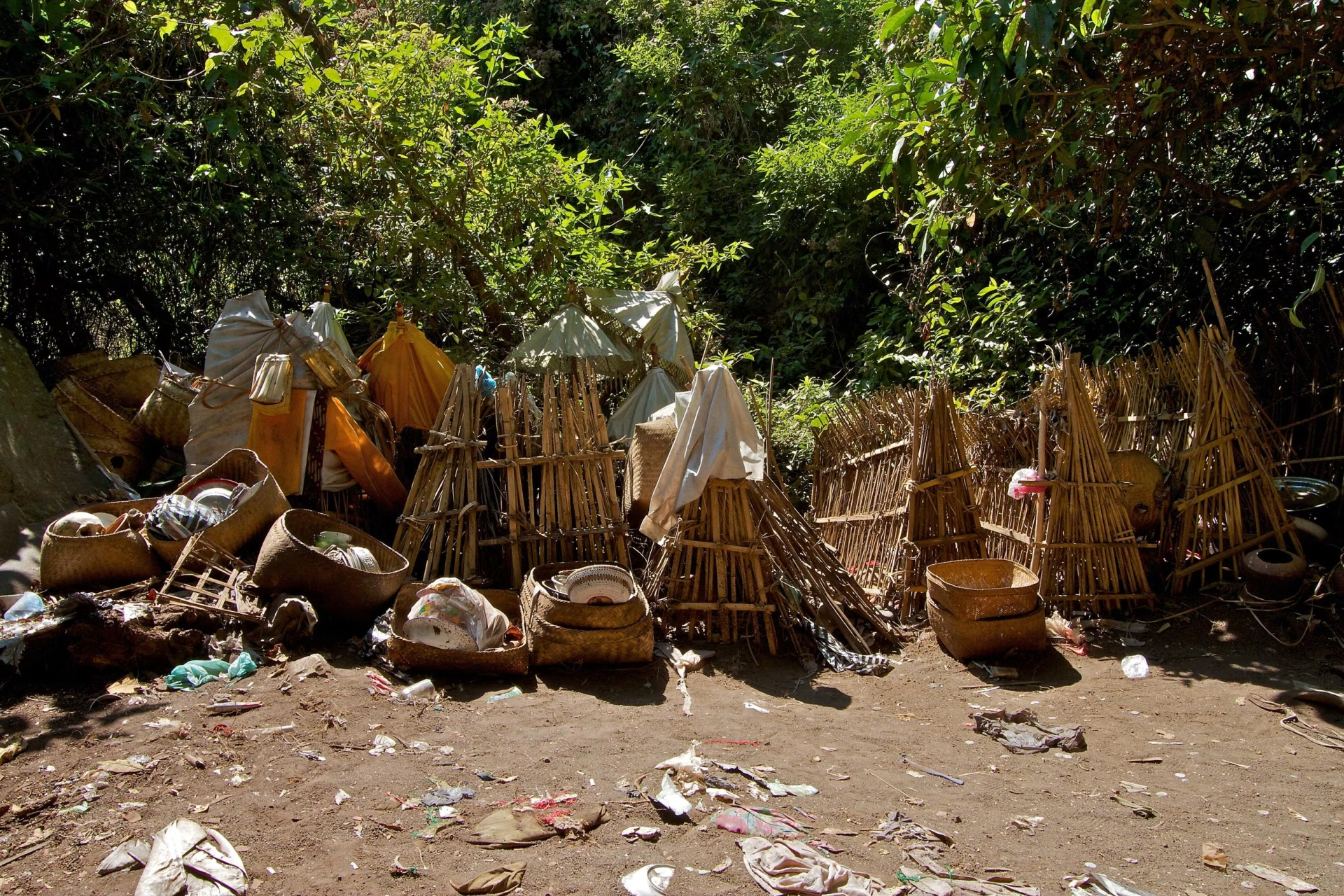
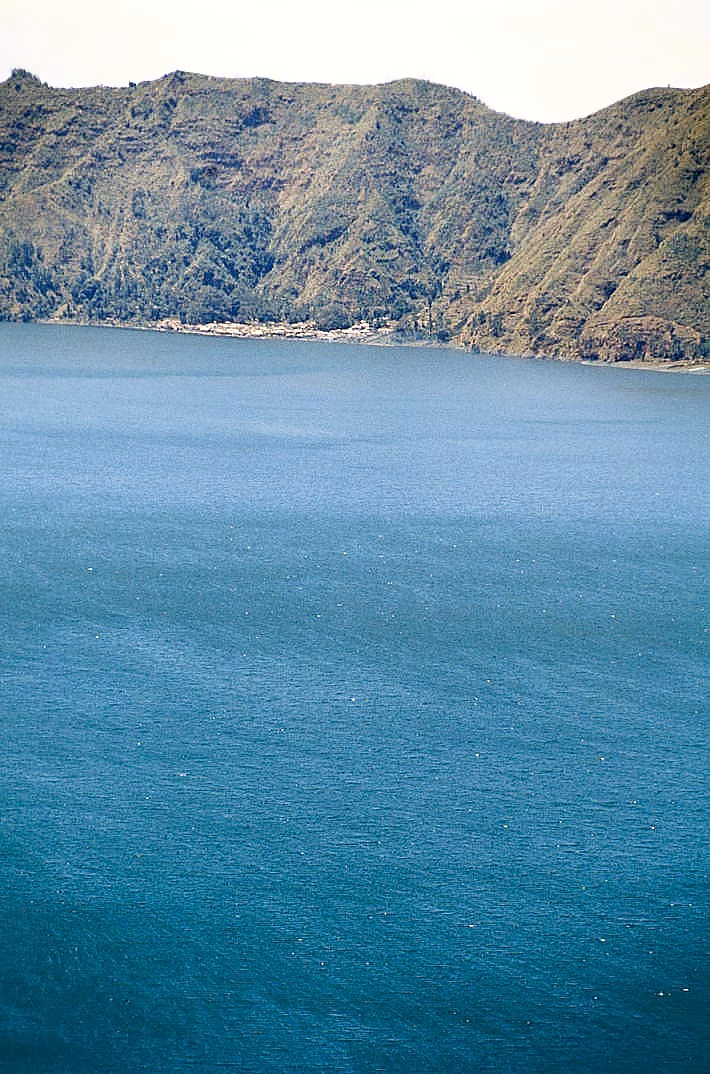
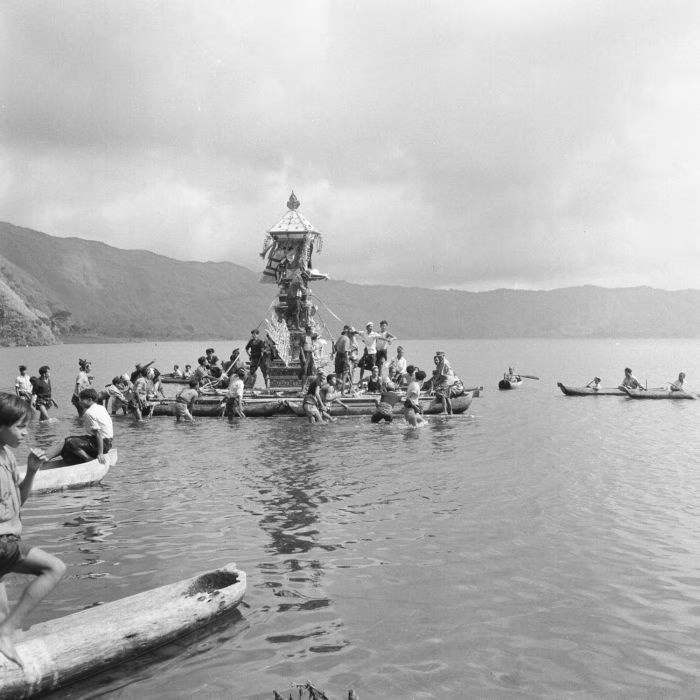
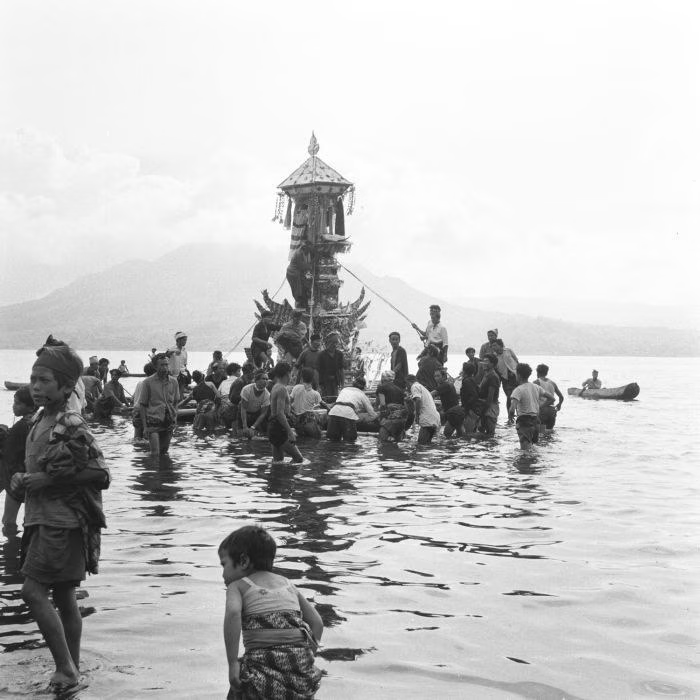
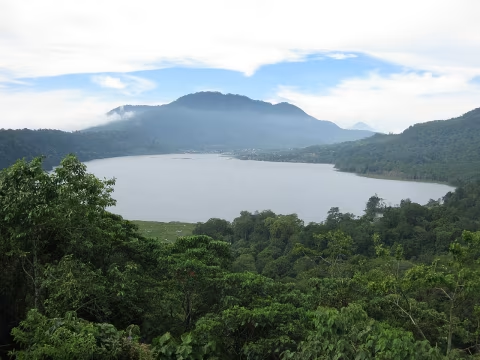
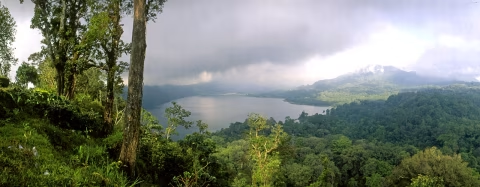
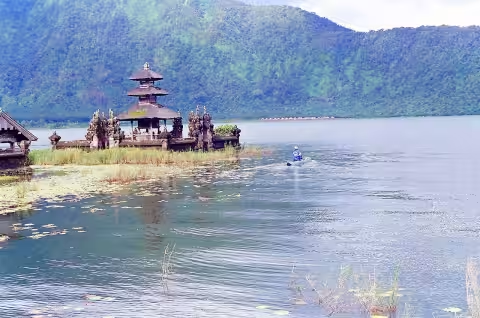
Trunyan is one of Bali's most ancient Bali Aga indigenous villages, accessible only by boat across Lake Batur to the far shore beneath the caldera wall. The village is famous for its extraordinary burial practice — the dead are placed in bamboo cages in a sacred grove under a massive taru menyan tree, and due to the tree's neutralising powers, the bodies do not decompose or produce odour in the usual way.
The Trunyan people consider themselves the original Balinese, pre-dating the Majapahit Hindu influence that shaped the rest of the island. The village maintains ancient traditions and the cemetery is one of the most unusual cultural sites in Bali.
Understanding Trunyan
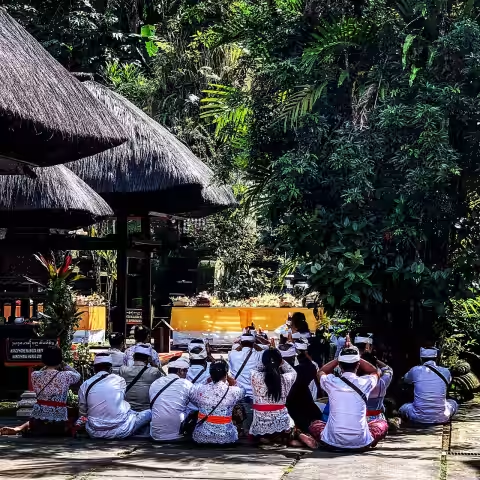
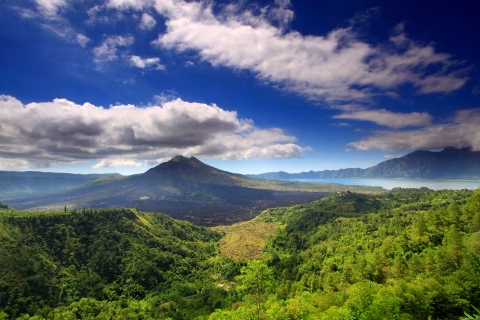
Trunyan is a Bali Aga community on the eastern shore of Lake Batur in Kintamani, Bangli. Its social life, customary system, architecture, and rituals are distinct from many other Balinese villages. The cemetery is a sacred and sensitive place within that living culture, not an entertainment attraction. Visitors should arrive prepared to listen, observe quietly, and accept that access or photography may be limited.
Trunyan Village Bali 1
The burial tradition commonly discussed in connection with Trunyan is Mepasah. In this practice, eligible deceased people are placed above the ground under bamboo structures in a cemetery area associated with the Taru Menyan tree. The Indonesia Travel account explains that local belief links the tree with the absence of a strong smell. This is a cultural belief and explanation; visitors should not handle, inspect, or make light of human remains or ritual objects.
Respectful cemetery visits
The cemetery area is sacred and can feel confronting. Wear modest, covered clothing, keep voices low, and follow the guide or caretaker at all times. Ask before taking photographs, especially when people, Trunyan Village Bali 2remains, bamboo structures, offerings, or ceremonies are visible. Do not touch, move, open, or stand on any object. Do not take souvenirs, bones, cloth, bamboo, flowers, or other materials from the site.
Do not make jokes, eat, smoke, play loud music, or use the cemetery as a backdrop for staged poses. Children should be prepared beforehand and supervised closely. If a family ceremony or local activity is underway, visitors may be asked to wait or leave. That request is part of responsible tourism and should be followed without argument.
Reaching the village
Trunyan is on the far side of Lake Batur and is commonly reached by boat from a lakeside departure point sucTrunyan Village Bali 3h as Kedisan, subject to current local arrangements. Crossing time, boat availability, cost, weather, and the landing point can change. Confirm the boat agreement, return plan, and meeting place before departing. Do not assume a boat will be available for an unscheduled return late in the day.
Travel to the lake area by road also varies with traffic, rain, and the starting point. Bring water, sun protection, secure footwear, and a light layer. Lake and mountain weather can change, and the shoreline may be uneven or wet. The Pura Ulun Danu Batur guide provides a separate Kintamani temple reference, while the Bayung Gede Village guide describes another Bangli cultural community. Each place has different rules and should be planned separately.
Interpreting the Bali Aga tradition
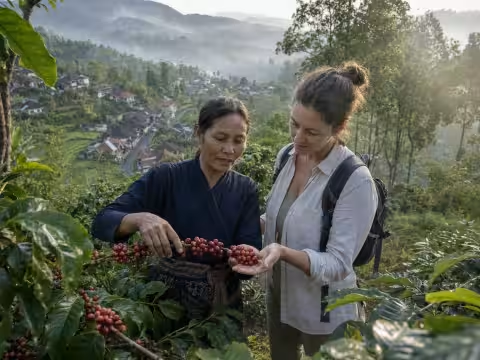
It is better to understand Trunyan through the community’s oTrunyan Village Bali 4wn explanations than through sensational descriptions. The village is not defined only by its cemetery. Lake Batur, customary organisation, daily work, religious practice, and local history all form part of the setting. A guide can explain why particular areas are restricted and how Mepasah fits within local belief and social rules.
Visitors should also avoid treating the tradition as a universal practice for every death in the village. Local explanations describe eligibility and customary conditions, and those conditions are not a tourist performance. Do not ask residents to reproduce a ritual, move an object, or pose beside a cemetery structure. If you are unsure how to behave, ask quietly and follow the answer.
Planning and responsible conduct
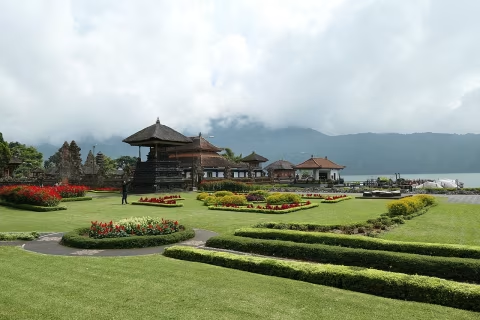
There is no fixed guarantee for opening access, boat operation, guide availability, or an excursion schedule. Ceremonies, weather, lake conditions, and local decisions can change the visit. Confirm current arrangements before leaving the mainland and keep the return journey flexible. The cemetery may not be appropriate for every traveller, especially children or anyone who would find the setting distressing.
Support the stated local arrangement transparently, keep the boat and village areas clean, and take all rubbish awaTrunyan Village Bali 5y. Do not trespass into homes, temples, farms, or restricted areas. Photography, drones, commercial filming, and recording may require permission. The most valuable contribution from a visitor is cultural sensitivity: arrive informed, ask permission, listen, and leave the place as it was found.
Frequently asked questions
Where is Trunyan Village?
Trunyan is on the eastern side of Lake Batur in Kintamani, Bangli Regency, Bali.
How do visitors reach Trunyan?
Visitors commonly cross Lake Batur by local boat, with departure points and arrangements confirmed locally before travel.
What is Mepasah?
Mepasah is a local funeral tradition in which eligible deceased people are placed above the ground under bamboo structures in a sacred cemetery area.
Can visitors touch or photograph the cemetery objects?
No. Do not touch or move anything, and ask permission before taking any photograph, especially where remains, offerings, or ceremonies are involved.
What should visitors wear?
Wear modest, covered clothing and secure shoes suitable for a boat crossing and uneven lakeside paths.
Can boat times, fees, and access change?
Yes. Weather, ceremonies, lake conditions, local rules, boat availability, and prices can change, so confirm arrangements before departure.
Reviews reflect our overall Bali tour service quality.
5.0
from 24 Google reviews
RussiaKudo90
Google Review
5
I’m happy to leave this review because I know Made personally, and I can honestly say he’s one of the best guides and kindest people you’ll meet in Bali.
What makes him special isn’t just his deep knowledge of the island – though that alone is impressive. He knows all the hidden gems, the best times to visit popular spots, and always has interesting stories behind every temple and rice terrace. But more than that, he genuinely cares about the people he’s with. He doesn't treat it like a job; he treats it like he's showing his own friends around his home.
I’ve seen how he goes out of his way to make sure everything runs smoothly, how he checks in on comfort and safety, and how he handles any little issue with a smile. He's reliable, patient, and incredibly warm-hearted. If you're looking for someone who will not only show you beautiful places but also make you feel welcome and looked after – Made is your guy.
I truly hope this comment helps him, because he absolutely deserves more recognition. Thank you, Made, for being the amazing person and guide that you are! 🙏🇮🇩
A month ago
Leah Davidson
Google Review
5
The Best Tour Guide in Bali!
We honestly couldn’t recommend Made enough! From start to finish, he was absolutely fantastic and went above and beyond to make our trip around Bali so special.
Before we even arrived, Made’s communication was amazing. He helped us plan our whole trip, gave us fantastic advice and recommendations, and really took the time to understand what we wanted to see and do. He made everything so easy and stress-free for us.
Throughout our trip, Made looked after us incredibly well. He picked us up, took us to all the different places we wanted to visit, and even showed us some amazing places we probably wouldn’t have found ourselves. His knowledge of Bali is incredible — he knew so much about every place we visited and was always happy to explain things and answer our questions.
What really stood out to us was how kind, caring and genuine Made was. He didn’t just feel like a tour guide; we genuinely felt like we were being looked after by a friend. He always made sure we were comfortable, safe and enjoying ourselves, and nothing ever felt like too much trouble.
Everyone in his team was also absolutely fantastic. They were friendly, professional and made us feel so welcome throughout our trip.
Made played such a huge part in making our Bali holiday so memorable. If you’re looking for someone who is reliable, knowledgeable, kind and genuinely cares about giving you the best possible experience, we would 100% recommend him.
Thank you so much, Made, for looking after us and helping us have such an amazing time in Bali. We’ll definitely be recommending you to anyone visiting Bali — and hopefully we’ll see you again one day! ❤️🇮🇩
A month ago
Max Maxvik
Google Review
5
Excellent, the driver is responsible, punctual, drives well, knows a lot of places to relax, the sights of Bali, speaks Russian, English and Chinese well.
A month ago
Софья Меркулова
Google Review
5
Очень советую Мади в качестве гида. Он организовывал нам тур на Нусу Пениду, у него много друзей, который организуют вам все что угодно за очень выгодную плату. Мади очень дружелюбный и улыбчивый человек, он знает русский язык, поэтому с ним можно разговаривать и узнавать многое про Бали. Я его всем советую в первую очередь, он может показать вам весь остров и организовать туры на другие соседние острова и вулканы. Спасибо ему большое, нам очень понравилось с ним проводить время. Советуем вам выбрать именно его за его труд, старания и доброжелательность
Мади, спасибо тебе ❤️
7 months ago
GEDE BMTHAMV
Google Review
5
Thanks a lot
8 months ago
Валерия Келейникова
Google Review
5
Thank you for a great day in Ubud, Madi 🙏🏻 We really enjoyed our cozy and interesting trip)
A year ago
Р М
Google Review
5
No written review.
A year ago
Bakhtiyar Azagov
Google Review
5
Thank you for hospitality! We enjoy our travel in Bali with you
Excatly Mr Burteh! He is best tour guide and driver in Bali. Mr Murteh is local, thats why he has to much information about Bali
Perfect
A year ago
Elena Toroshniak
Google Review
5
Нам повезло, что знакомы с Маде. Это самый добрый и искренний человек на Бали
A year ago
Vit Mit
Google Review
5
Путешествие на Бали – это всегда погружение в мир красоты, духовности и уникальной культуры. Но по-настоящему раскрыть душу острова, прочувствовать его магию можно только с опытным и увлеченным проводником. Нам в этом невероятно повезло – мы встретили Маде!
Маде – не просто гид, он настоящий хранитель традиций и наследник балийской культуры. Он открыл нам не только знаменитые достопримечательности, но и тайные уголки острова, поделился своими знаниями о древних обычаях и верованиях. Благодаря Маде мы смогли:
* Почувствовать энергетику священных храмов: Маде рассказал нам об истории и значении каждого храма, помог правильно провести церемонии и почувствовать связь с духовным миром Бали.
* Погрузиться в атмосферу балийской деревни: мы побывали в гостях у местных жителей, познакомились с их бытом, попробовали традиционные блюда и даже приняли участие в мастер-классах по ремеслам.
* Насладиться природными красотами: Маде показал нам живописные рисовые террасы, вулканы, водопады и секретные пляжи, где можно было отдохнуть от шума и суеты.
Но самое главное – Маде подарил нам незабываемые эмоции, искреннее общение и теплоту. Он отвечал на все наши вопросы, учитывал наши пожелания и создавал атмосферу настоящего приключения.
Мы безгранично благодарны Маде за это удивительное путешествие! Он помог нам открыть для себя настоящий Бали – остров Богов, красоты и гармонии. Если вы планируете поездку на Бали, обязательно обратитесь к Маде – он сделает ваше путешествие незабываемым!
A year ago
Галина Бардымова
Google Review
5
Мадэ очень классный, дружелюбный и общительный, интересно рассказывает)
Ждет когда нужно, в общем, очень приятный) рекомендую
Можно обо всем договориться) если будет дождь, он сопровождает с зонтиком)
A year ago
Инна Звездина
Google Review
5
Спасибо большое, мы объехали за один день все прекрасные пляжи 😍
Остались очень довольны и будем рекомендовать друзьям 🙏🏻✨
A year ago
ЖАННА
Google Review
5
Хотим от всего сердца поблагодарить нашего гида Маде. Наше путешествие по Бали было незабываемо! Благодаря вам мы познакомились с этой чудесной страной! Нас не только возили по районам, но и рассказывали историю Бали❤️ мы чувствовали себя в полной безопасности и полную заботу о нас. Благодарим и до встречи вновь на Бали🫶🏻
A year ago
Карина Ревазян
Google Review
5
Veryyyy good
A year ago
Влад Хайбулин
Google Review
5
No written review.
A year ago
細野佳代子
Google Review
5
No written review.
A year ago
Alex Alex
Google Review
5
Очень рекомендую этого русскоговорящего балийца! 👍 Экскурсии с ним - это просто супер! 🤩 Он не только рассказывает интересные факты об острове и показывает самые красивые места, но и делится местными фишками, о которых не прочитаешь в путеводителях. 😉 Он очень внимательный и отзывчивый, с ним легко и приятно общаться.
2 years ago
Евгений Ширшин
Google Review
5
Маде добряк!) очень внимательный, и профессиональный гид! Уже много лет дружим с ним! Провез по всем уголкам прекрасного Бали! Хорошо говорит на русском и английском языках! Аккуратно водит машину! Очень адекватные цены на экскурсии!! Знает все вкусные и красивые места! Поможет со всеми вопросами на Бали, такие как аренда скутера, или аренда жилья! Встретит и проводит в аэропорт, если вы с ребенком то у Маде прекрасные дочки которые с удовольствием побуду няней!))
Всем рекомендую это агенство!!
2 years ago
Сергей Милых
Google Review
5
No written review.
2 years ago
Denise
Google Review
5
Made did an amazing job as a guide!
Comfortable pick-up & drop-off, safe driving, very friendly & helpful, explained a lot while driving & visiting the spots. He knows a lot and is happy to answer any questions! He also brought local fruits for testing! Amazing day, thank you so much! 🙏🏼🫶🏼🧡
2 years ago
Stijn Heerze
Google Review
5
Really nice and kind guide. Knows a lot about Bali. Also a very good driver.
2 years ago
Juliette Bos
Google Review
5
Very nice driver, good communication and good service. Perfect!
2 years ago
Nengah Negare
Google Review
5
This company is the best, good driver and pofesional guide, i am very enjoy visiting Bali island 👍👍👍
2 years ago
Ni Kadek Kardiasih
Google Review
5
Sakuraba give me best service treveling in bali. Thakyou very much for guide bali sakuraba
2 years ago
Visit Trunyan Village with a Trusted Bali Guide
Tell us your travel dates, group size, and any special requests — we'll plan a seamless private tour that includes Trunyan Village and more of Bali's best.