Nusa Penida is the island Bali's own postcards can't quite prepare you for. It's a rugged, less-developed island a short boat ride southeast of the mainland, administratively part of Klungkung Regency, known for dramatic limestone cliffs, hidden turquoise coves, and the T-Rex-shaped Kelingking peninsula, now one of the most photographed viewpoints in Indonesia. Where southern Bali is built up and busy, Nusa Penida still feels raw: unpaved roads, small-scale warungs, and coastline that hasn't been smoothed over for tourism.
What Are the Three Nusa Islands?
Nusa Penida doesn't stand alone. It's the largest of a trio of islands, together with Nusa Lembongan and Nusa Ceningan, that make up the Nusa Penida District within Klungkung Regency. Locally the group is sometimes called the Tri Nusa. In Balinese legend, all three are said to have been shaped from the sea by the god Batara Segara, and Nusa Penida in particular carries an older, heavier history: Balinese kingdoms once used it as a place of exile, which is part of why the island built a reputation as remote and a little feared long before it became a tourist draw.
The three Nusa islands: Nusa Penida, Nusa Lembongan, and Nusa Ceningan
Nusa Lembongan, the middle island, was known for seaweed farming before tourism arrived and today has more resorts and a more built-up feel than Penida. Nusa Ceningan, the smallest of the three, sits between Lembongan and Penida and is connected to Lembongan by the Yellow Bridge, so travelers based on Lembongan often walk or scooter across for the day. Nusa Penida itself remains the roughest and least developed of the three, which is exactly what this guide covers.
The Yellow Bridge connecting Nusa Lembongan and Nusa Ceningan
Practically, this matters for planning: the online entrance ticketing covers both Nusa Penida and Nusa Lembongan under the same system (see fees below), and some day tours combine a Nusa Penida circuit with a stop on Lembongan or Ceningan rather than sticking to one island.
Which Circuit Should You Do, West or East?
The island rewards a full day, not a quick stop, and it's larger and slower to cross than it looks on a map. The main sights split into two clusters on opposite sides of the island, west and east, and the road connecting them runs through the island's rougher, hillier interior. That's the practical reason for splitting into two circuits rather than one big loop: driving from the west cluster to the east cluster and back eats most of a day on its own, before you've stopped anywhere.
Most visitors pick one circuit and commit to it for the day, rather than trying to do both. A full day realistically allows 3 to 4 unhurried stops, and each of the well-known viewpoints, Kelingking especially, gets busy with tour groups by mid-morning, so arriving early and moving at a relaxed pace matters more than cramming in extra locations. Trying to squeeze both circuits into a single day usually means less time at each stop and several hours lost to driving between the two sides of the island.
If you want to see both circuits properly, the more realistic way to do it is across two separate visits: a day trip for the west circuit, and either a second day trip on a later date or an overnight stay (see Staying Overnight below) that lets you do the west circuit one day and the east circuit the next, without rushing either.
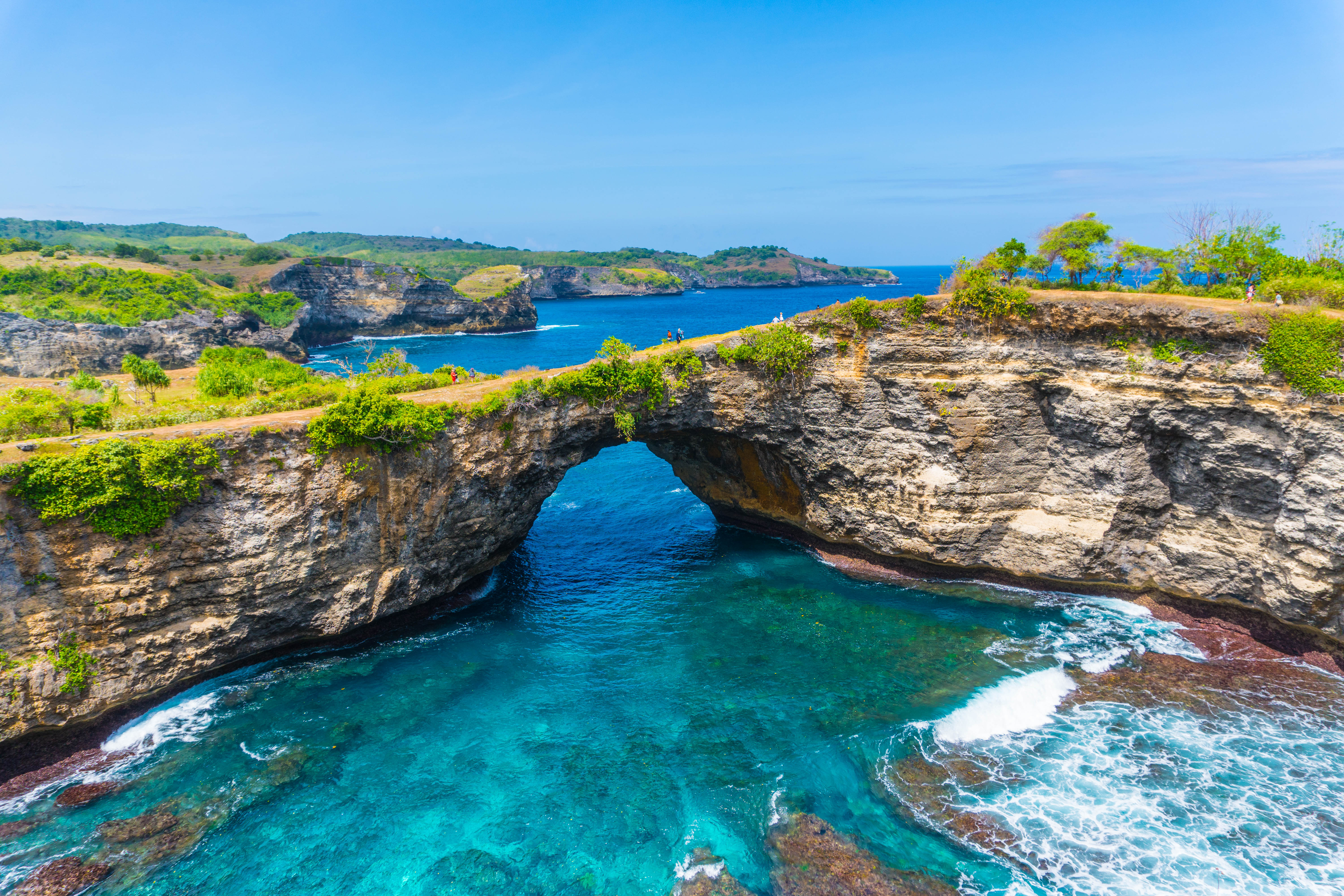
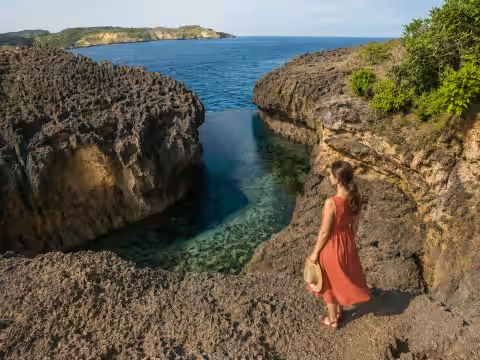
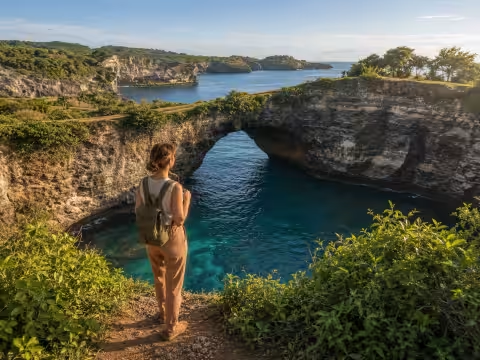
The West Circuit route: Crystal Bay, Broken Beach, Angel's Billabong, Kelingking BeachBroken Beach (Pasih Uug), part of the West Circuit
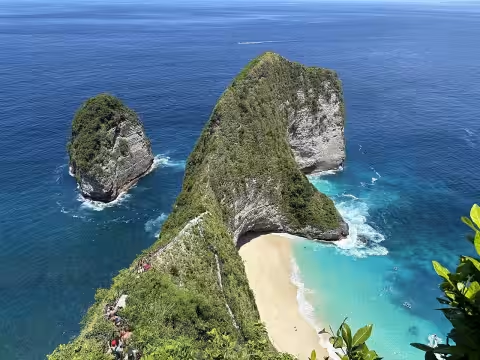
Kelingking is a viewpoint first, not an easy beach stop. The descent is steep and exposed, and conditions can change after rain. Stay behind barriers, wear proper shoes, and do not attempt the trail if the weather or your fitness level makes it unsafe.
Kelingking Beach (T-Rex Bay), Nusa Penida; photo by Chainwit. via Wikimedia Commons, CC BY 4.0. Source: https://commons.wikimedia.org/wiki/File:Kelingking_Beach_(T-Rex_Bay)_of_Nusa_Penida,_Bali_(2025)_-_img_04.jpg
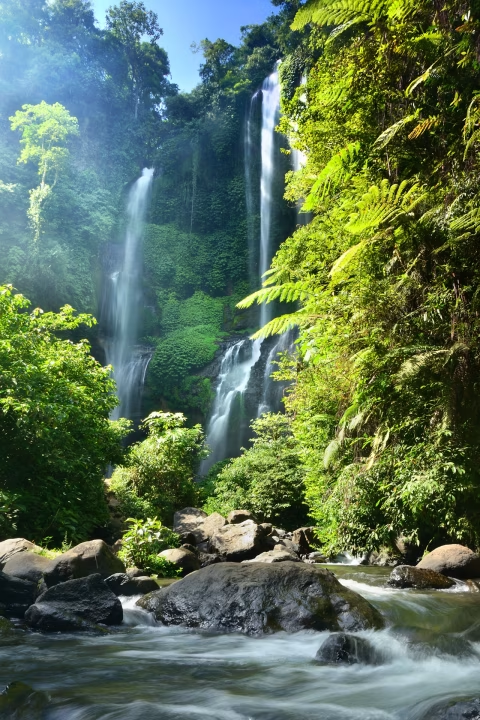
A handful of cultural and natural stops, Pura Penataran Ped and Seganing Waterfall among them, are worth building into either route if time allows.
Crystal Bay, Nusa Penida; photo by Panina Manina via Wikimedia Commons, CC BY-SA 4.0. Source: https://commons.wikimedia.org/wiki/File:Crystal_Bay,_Nusa_Penida_2017-08-20_(13).jpg
Where Can You Dive and Snorkel?
Nusa Penida is one of the best dive destinations in Indonesia, not just a viewpoint island. The waters around it hold a resident population of over 800 manta rays, visible year-round at Manta Point on the southwest coast, suitable for snorkelers and divers of most levels.
The bigger draw for many divers is the mola mola, or ocean sunfish. Crystal Bay is considered the world's most reliable site for spotting one, along with nearby sites like Gamat Bay, Sental, and Ped. Season matters here: mola mola show up from around July to October, with the best odds in the peak months of August and September, when cold-water upwelling brings them up to diveable depths of 20 to 40 meters. An Advanced Open Water certification is recommended for mola mola dives because of that depth.
Manta ray at Manta Point, Nusa Penida; photo by Andrepiazza via Wikimedia Commons, CC BY-SA 3.0. Source: https://commons.wikimedia.org/wiki/File:19-Indonesia-Bali_Nusa-Penida_Manta-Point_12_(Manta-Rays)-APiazza.JPG
Are the Manta Rays Protected?
The manta rays and mola mola that draw divers to Nusa Penida are part of a genuinely active conservation effort, not just a tourist attraction. Manta rays received full protection status in Indonesian waters in 2014, and organizations including the Manta Trust and Coral Triangle Center run ongoing photo-identification and genetic research programs on the local population, since surprisingly little formal research existed on Nusa Penida's mantas despite how popular they are with dive tourists.
Local dive operators, coordinated through groups like the Coral Triangle Center and the Lembongan Marine Association, follow a code of conduct for interacting with manta rays and mola mola: keeping a respectful distance, no touching, no chasing, limiting group sizes at cleaning stations. Many operators also pursue Green Fins certification, a United Nations Environment Programme scheme for environmentally responsible diving and snorkeling businesses. Manta Point itself is expected to eventually be formally designated a Marine Tourism Zone, which would ban fishing there and put a formal tourism management structure in place.
None of this requires extra effort from a day visitor beyond what's already covered in Responsible Visiting below: book with an operator who follows a manta code of conduct, keep your distance from the marine life, and treat the reef and its inhabitants as something being actively protected, not just scenery.
Fast boat transportation at Sanur harbor; photo by Imadedana via Wikimedia Commons, CC BY-SA 4.0. Source: https://commons.wikimedia.org/wiki/File:Fast_boat_transportation_at_Sanur_harbor.jpg
How Do You Get to Nusa Penida?
Fast boats cross from Sanur, roughly 30 to 45 minutes depending on the operator, landing at Toyapakeh or Banjar Nyuh port on the island's north coast. From there, most travelers rent a scooter or hire a car with a driver for the day. The roads are steep, narrow, and occasionally rough, so a driver is the more comfortable option if you'd rather not navigate unfamiliar terrain yourself.
How Do You Get Around the Island?
Getting to the island is only half the logistics. Once you're on Nusa Penida, most of the day is spent on the road between viewpoints, and how you get around shapes the whole experience.
Scooter rental: the cheapest and most flexible option, but only a sensible choice if you're an experienced rider. The roads are steep, narrow, sometimes unpaved, and shared with tour vans taking blind corners.
Private driver: the more comfortable and safer choice for most visitors, especially anyone not confident on a scooter over rough terrain, and it means one less thing to plan since the driver already knows the circuit.
Organized day tour: bundles the boat, driver, and a fixed circuit into one trip, trading flexibility for simplicity. Good for a first visit if you'd rather not coordinate the logistics yourself.
Road conditions vary noticeably by circuit. The west coast road (Kelingking, Angel's Billabong, Broken Beach, Crystal Bay) is more developed and better paved, since it sees the most tourist traffic. The east coast road (Atuh Beach, Diamond Beach, Teletubbies Hills) is rougher, hillier, and slower going, which is part of why it stays quieter.
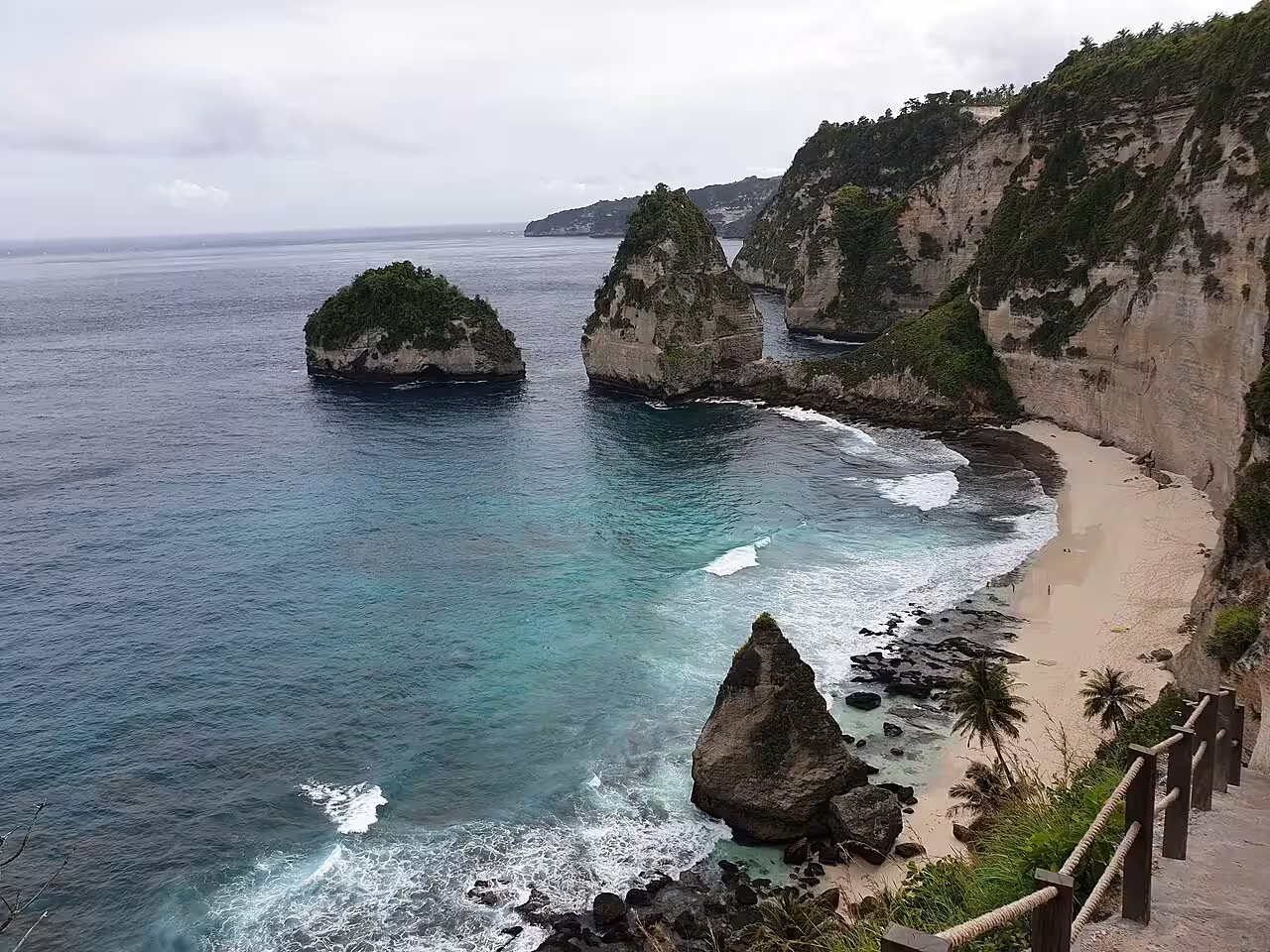
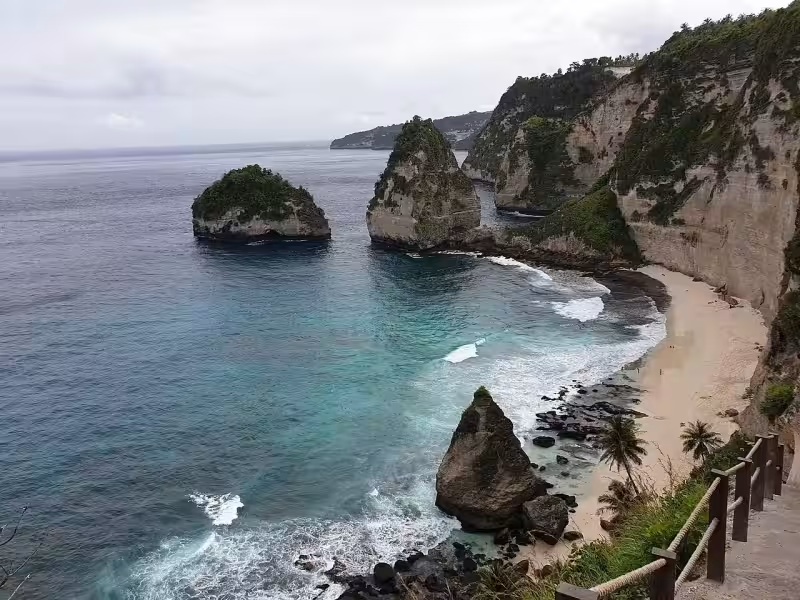
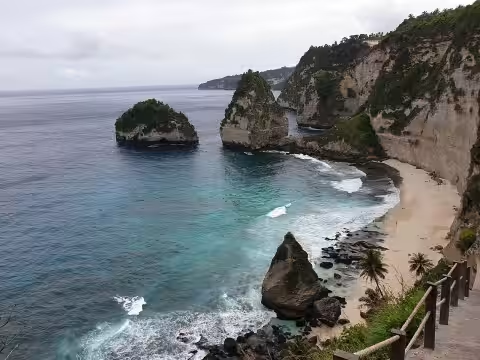
Diamond Beach is on the east circuit and is reached by a steep staircase from the viewpoint. The stairway can be hot, narrow, and slippery, so plan extra time and descend only when conditions and your energy are suitable.
Diamond Beach, Nusa Penida; photo by Stryn via Wikimedia Commons, CC BY-SA 4.0. Source: https://commons.wikimedia.org/wiki/File:Diamond_Beach_in_Nusa_Penida,_Bali.jpg
What Are the 2026 Entry Fees?
There was a real change to how this works in 2026, so this section is worth reading even if you've visited before. As of September 2026, the Klungkung Regency government has announced an integrated tourism retribution under Regional Regulation No. 4 of 2026. The official notice states that the area retribution for Nusa Penida, Nusa Lembongan, and Nusa Ceningan applies to foreign visitors and is paid once on entering the area; attraction retribution applies to all visitors at each attraction. Confirm the official payment channel, QR or e-ticket process, and any operational changes before travelling.
Fee
Amount
When / How
Nusa Penida / Lembongan entrance fee
IDR 25,000 adults, IDR 15,000 children
Online only, since April 21, 2026
Bali provincial tourism tax
IDR 150,000
Once per trip, online or at the airport
Marine Protected Area permit
~IDR 100,000 per day
If snorkeling or diving
Viewpoint parking
IDR 5,000 to 10,000 each
Cash only, per stop
Carry a backup payment method and keep the official receipt or QR ticket. Do not rely on old fee tables or unofficial links: the payment system and the distinction between area and attraction retribution have changed during 2026.
How Much Should You Budget for a Day?
Putting the fees above into a single trip, a typical one-day visit for one international adult, self-guided rather than on an organized tour, looks roughly like this:
Item
Estimated Cost (IDR)
Bali tourism tax (one-time, covers the whole trip)
150,000
Nusa Penida entrance fee
25,000
Return fast boat, Sanur to Nusa Penida
200,000 to 400,000
Scooter rental for the day (or driver: 500,000-700,000)
70,000 to 100,000
Marine Protected Area permit, if snorkeling
~100,000
Parking, per stop
5,000 to 10,000
Lunch and drinks
50,000 to 100,000
All in, a self-guided day on a scooter runs somewhere around IDR 500,000 to 800,000 per person (roughly USD 30 to 50), before the one-time tourism tax. Adding a private driver instead of a scooter pushes that toward IDR 1,000,000 to 1,300,000 if you're not splitting the driver's fee across a group. Organized day tours bundle most of this into one price, typically in a similar range once boat and driver are included.
Should You Stay Overnight?
Most visitors day-trip from mainland Bali, but staying a night or two changes the experience: quieter viewpoints in the early morning before the day-tour boats arrive, and time to actually cover both coastal circuits without rushing. Accommodation ranges from simple homestays to boutique clifftop stays, concentrated around Toyapakeh, Crystal Bay, and near Atuh Beach on the east side. Book ahead in the July to September peak season, since the island's room count is still small relative to demand.
Do You Need Cash and Is There Wifi?
ATMs exist in Toyapakeh and Sampalan, but they're limited in number and occasionally run out of cash or go offline. Don't count on finding one when you need it.
Mobile signal is patchy, especially on the east coast circuit. Telkomsel and XL Axiata generally have the best coverage across the island; a local SIM or eSIM before you arrive is worth it if you need to stay connected.
Download offline maps before you go, since signal gaps make live navigation unreliable in places.
Is Nusa Penida Good for Families?
Nusa Penida is not an easy island for families with young children, travelers with mobility limitations, or anyone uneasy on unstable ground. Most of the famous viewpoints, Kelingking Beach and Diamond Beach especially, sit at the top of sheer, largely unfenced cliffs, and the paths to reach them are often uneven dirt or loose rock. The descent trail to the beach at the bottom of Kelingking is a steep, rope-assisted scramble that isn't suitable for young kids, older travelers, or anyone with knee or balance issues.
The roads compound this: scooters are common, road surfaces are inconsistent, and there's little in the way of pavement, railings, or accessible infrastructure anywhere on the island. Families traveling with a stroller or anyone using a wheelchair will find very few places on Nusa Penida practical to visit without assistance.
None of this rules out a family visit. Crystal Bay's beach is flat, sandy, and calm enough for young children to paddle, and viewpoints can generally be enjoyed from a safe distance without approaching the cliff edge. It just means the itinerary should be built around what's realistic for the group, rather than assuming every stop on a typical circuit is workable for every traveler.
Is Nusa Penida Safe to Visit?
Nusa Penida's tour boats and snorkeling trips have been under real scrutiny in 2026 after several serious incidents involving tourist boats around the island and nearby Nusa Lembongan, including fatal collisions between boats and snorkelers in the water. Maritime safety authorities have pointed to inconsistent enforcement and boats that don't meet certification standards as recurring issues. None of this means you should skip the water; it's the whole point of coming here. But it's worth being deliberate about it:
Book snorkeling and boat trips through an established, licensed operator rather than the cheapest option on the beach
Confirm the boat has enough life jackets for everyone on board, and wear one
Ask whether a spotter or flag is used to mark swimmers and snorkelers before boats pass through
Avoid overloaded boats; Indonesia has seen multiple passenger-boat incidents in 2026 tied to overcapacity
Goa Giri Putri, Nusa Penida; photo by Sasuke shinozawa via Wikimedia Commons, CC BY-SA 4.0. Source: https://commons.wikimedia.org/wiki/File:Goa-giri-putri.jpg
How Can You Visit Responsibly?
Angel's Billabong, a natural tidal pool on the west coast
Temples like Pura Penataran Ped and Goa Giri Putri are active places of worship. Dress modestly, and a sarong may be required.
Stay behind marked barriers at cliff viewpoints. The drops at Kelingking and Diamond Beach are real and largely unfenced.
Avoid stepping on coral and use reef-safe sunscreen when snorkeling at Crystal Bay or Angel's Billabong.
Drones need permission near temples, crowds, or wildlife areas. Check before flying.
When Is the Best Time to Visit?
The dry season, April to October, is the easiest window overall: calmer seas for the boat crossing, easier road conditions, and clearer water for snorkeling. Within that window, July to October adds the best odds of seeing mola mola, and manta rays are a good bet year-round. Whichever circuit you choose, a full day is realistic for 3 to 4 stops; trying to cover both coasts in one day usually means rushing past the parts worth lingering in.
Temperatures stay fairly consistent year-round, with daytime highs around 27 to 29 degrees Celsius and little seasonal swing, so heat isn't really the deciding factor. Rainfall is: January is the wettest month, averaging around 288mm of rain across roughly 20 rainy days, while August is the driest, averaging around 35mm over a single rainy day in a typical year. The rainy season runs roughly December through March, and this is also when boat crossings are most likely to be delayed or cancelled by rough seas, which matters more for trip planning than the rain itself.
If picking a single best window, May through October offers the most reliable combination of calm seas, dry roads, and clear water, with September often cited as the sweet spot for mola mola sightings specifically. Late December through February is the one stretch worth actively avoiding for a first visit, since rough seas can cancel the boat crossing entirely with little notice.
How Do You Combine It With the Rest of Bali?
Most visitors base themselves on mainland Bali (Canggu, Seminyak, Ubud, or Sanur) and treat Nusa Penida as a single day trip or overnight add-on rather than a separate base for their whole stay. From Ubud or Canggu, factor in an extra 45 to 90 minutes of road travel to reach Sanur Harbor before the boat crossing even starts, which is part of why an early departure (most day tours leave by 6:30 to 7:30am) matters for making the most of the day.
Because the west coast circuit here overlaps naturally with a broader south Bali itinerary, and the east coast circuit rewards a slower pace, many travelers split the difference: a single, efficient day trip covering Kelingking, Angel's Billabong, Broken Beach, and Crystal Bay from the west circuit, saved as a highlight within a longer Bali trip, with the quieter east coast and an overnight stay reserved for a return visit or for travelers who already know they want to slow down.
What Should You Pack?
A few items make a genuine difference on Nusa Penida, beyond the usual sun hat and swimsuit:
Closed-toe shoes with grip: essential for the Kelingking descent trail and useful on the loose, rocky paths at most viewpoints. Flip-flops are not enough.
Cash in small denominations: parking fees, warungs, and most small purchases are cash-only, and vendors often can't break large notes.
A physical or offline map: mobile signal drops out in stretches, especially on the east coast, and missing a turn on unfamiliar roads costs real time.
Reef-safe sunscreen: both for the coral at Crystal Bay and Angel's Billabong, and because there's very little shade at most viewpoints, so reapplication matters.
A dry bag or waterproof phone pouch: useful for the boat crossing, which can get splashy, and for snorkeling stops.
A portable charger: outlets are scarce away from accommodation, and a full day of navigation and photos runs a phone down fast.
How Do You Get the Best Photos?
Nusa Penida's viewpoints, Kelingking Beach especially, are among the most photographed spots in Indonesia, and a few practical notes help beyond just showing up with a camera.
Morning light, before roughly 9am, is consistently better than midday: the haze that builds up over the water through the late morning softens contrast and dulls the turquoise color that makes these photos distinctive. Morning also means smaller crowds at the main viewpoints, since most organized day tours arrive slightly later. At Kelingking specifically, the classic angle is from the main viewing platform looking down the length of the peninsula; a wider lens or panorama mode captures the full T-Rex silhouette that gives the spot its nickname. At Angel's Billabong and Broken Beach, low tide matters as much as light, since the pool and the water inside the archway both look best when the tide is out. A polarizing filter, or simply shooting at an angle to the water rather than straight down, cuts glare and brings out the turquoise color in phone photos as well as it does with a dedicated camera.
Ngaben ceremony in Nusa Penida; photo by Imadedana via Wikimedia Commons, CC BY-SA 4.0. Source: https://commons.wikimedia.org/wiki/File:Ngaben_di_Nusa_Penida.jpg
What Else Should You Know?
The descent trail at Kelingking Beach is steep with rope sections. Closed-toe shoes are worth packing.
There's little shade at most viewpoints. Sun protection and water are essential.
Scooter rental typically runs a modest daily rate if you're comfortable riding on the island's rougher roads yourself; hiring a driver for the day is the easier option for most visitors.
The Sanur to Nusa Penida crossing can be rough in choppy conditions. If you're prone to motion sickness, take medication before boarding rather than after symptoms start.
Public toilets are limited outside the main viewpoints, and the ones that exist are usually a small paid facility (a few thousand IDR) rather than free. Plan accordingly on longer stretches between stops.
Tipping isn't obligatory but is appreciated for drivers and guides on a full-day tour; a modest amount at the end of the day is the local norm rather than a percentage of the tour cost.
Last updated August 2026, reflecting Nusa Penida and Nusa Lembongan's move to mandatory online entry ticketing on April 21, 2026. Sources: Hey Bali News on the e-ticketing change, The Bali Sun on 2026 boat safety incidents, Two Fish Divers on mola mola diving season, Save Our Seas Foundation on manta ray conservation, and Weather and Climate for monthly rainfall and temperature averages. Fees and rules can change; always double-check current requirements before you travel.
Frequently asked questions
Where is Nusa Penida?
Nusa Penida is an island southeast of Bali, separated from mainland Bali by the Badung Strait. Travel planning normally starts from a harbour on Bali before continuing by boat.
How should I plan a Nusa Penida visit?
Choose your base and transport before arrival. Distances between viewpoints and beaches can take longer than they appear on a map, so avoid packing too many far-apart stops into one day.
What landscapes can visitors see?
The island includes coastal cliffs, beaches, viewpoints, rural roads, and areas used for religious practice. Conditions vary by site, so follow local signs and use established access routes.
What should I bring?
Bring drinking water, sun protection, suitable walking footwear, and a secure bag. Some coastal approaches involve stairs, uneven ground, heat, or limited shade.
How can visitors travel responsibly?
Respect temple and village customs, stay on marked paths, do not leave rubbish, and avoid entering restricted or private areas. Check current boat and attraction information before departure.
Is Nusa Penida suitable for every traveller?
It depends on the itinerary. Several viewpoints and beach approaches involve steep steps, uneven surfaces, or exposed edges, so select stops according to your mobility, weather, and comfort level.
Reviews reflect our overall Bali tour service quality.
5.0
from 24 Google reviews
RussiaKudo90
Google Review
5
I’m happy to leave this review because I know Made personally, and I can honestly say he’s one of the best guides and kindest people you’ll meet in Bali.
What makes him special isn’t just his deep knowledge of the island – though that alone is impressive. He knows all the hidden gems, the best times to visit popular spots, and always has interesting stories behind every temple and rice terrace. But more than that, he genuinely cares about the people he’s with. He doesn't treat it like a job; he treats it like he's showing his own friends around his home.
I’ve seen how he goes out of his way to make sure everything runs smoothly, how he checks in on comfort and safety, and how he handles any little issue with a smile. He's reliable, patient, and incredibly warm-hearted. If you're looking for someone who will not only show you beautiful places but also make you feel welcome and looked after – Made is your guy.
I truly hope this comment helps him, because he absolutely deserves more recognition. Thank you, Made, for being the amazing person and guide that you are! 🙏🇮🇩
A month ago
Leah Davidson
Google Review
5
The Best Tour Guide in Bali!
We honestly couldn’t recommend Made enough! From start to finish, he was absolutely fantastic and went above and beyond to make our trip around Bali so special.
Before we even arrived, Made’s communication was amazing. He helped us plan our whole trip, gave us fantastic advice and recommendations, and really took the time to understand what we wanted to see and do. He made everything so easy and stress-free for us.
Throughout our trip, Made looked after us incredibly well. He picked us up, took us to all the different places we wanted to visit, and even showed us some amazing places we probably wouldn’t have found ourselves. His knowledge of Bali is incredible — he knew so much about every place we visited and was always happy to explain things and answer our questions.
What really stood out to us was how kind, caring and genuine Made was. He didn’t just feel like a tour guide; we genuinely felt like we were being looked after by a friend. He always made sure we were comfortable, safe and enjoying ourselves, and nothing ever felt like too much trouble.
Everyone in his team was also absolutely fantastic. They were friendly, professional and made us feel so welcome throughout our trip.
Made played such a huge part in making our Bali holiday so memorable. If you’re looking for someone who is reliable, knowledgeable, kind and genuinely cares about giving you the best possible experience, we would 100% recommend him.
Thank you so much, Made, for looking after us and helping us have such an amazing time in Bali. We’ll definitely be recommending you to anyone visiting Bali — and hopefully we’ll see you again one day! ❤️🇮🇩
A month ago
Max Maxvik
Google Review
5
Excellent, the driver is responsible, punctual, drives well, knows a lot of places to relax, the sights of Bali, speaks Russian, English and Chinese well.
A month ago
Софья Меркулова
Google Review
5
Очень советую Мади в качестве гида. Он организовывал нам тур на Нусу Пениду, у него много друзей, который организуют вам все что угодно за очень выгодную плату. Мади очень дружелюбный и улыбчивый человек, он знает русский язык, поэтому с ним можно разговаривать и узнавать многое про Бали. Я его всем советую в первую очередь, он может показать вам весь остров и организовать туры на другие соседние острова и вулканы. Спасибо ему большое, нам очень понравилось с ним проводить время. Советуем вам выбрать именно его за его труд, старания и доброжелательность
Мади, спасибо тебе ❤️
7 months ago
GEDE BMTHAMV
Google Review
5
Thanks a lot
7 months ago
Валерия Келейникова
Google Review
5
Thank you for a great day in Ubud, Madi 🙏🏻 We really enjoyed our cozy and interesting trip)
A year ago
Р М
Google Review
5
No written review.
A year ago
Bakhtiyar Azagov
Google Review
5
Thank you for hospitality! We enjoy our travel in Bali with you
Excatly Mr Burteh! He is best tour guide and driver in Bali. Mr Murteh is local, thats why he has to much information about Bali
Perfect
A year ago
Elena Toroshniak
Google Review
5
Нам повезло, что знакомы с Маде. Это самый добрый и искренний человек на Бали
A year ago
Vit Mit
Google Review
5
Путешествие на Бали – это всегда погружение в мир красоты, духовности и уникальной культуры. Но по-настоящему раскрыть душу острова, прочувствовать его магию можно только с опытным и увлеченным проводником. Нам в этом невероятно повезло – мы встретили Маде!
Маде – не просто гид, он настоящий хранитель традиций и наследник балийской культуры. Он открыл нам не только знаменитые достопримечательности, но и тайные уголки острова, поделился своими знаниями о древних обычаях и верованиях. Благодаря Маде мы смогли:
* Почувствовать энергетику священных храмов: Маде рассказал нам об истории и значении каждого храма, помог правильно провести церемонии и почувствовать связь с духовным миром Бали.
* Погрузиться в атмосферу балийской деревни: мы побывали в гостях у местных жителей, познакомились с их бытом, попробовали традиционные блюда и даже приняли участие в мастер-классах по ремеслам.
* Насладиться природными красотами: Маде показал нам живописные рисовые террасы, вулканы, водопады и секретные пляжи, где можно было отдохнуть от шума и суеты.
Но самое главное – Маде подарил нам незабываемые эмоции, искреннее общение и теплоту. Он отвечал на все наши вопросы, учитывал наши пожелания и создавал атмосферу настоящего приключения.
Мы безгранично благодарны Маде за это удивительное путешествие! Он помог нам открыть для себя настоящий Бали – остров Богов, красоты и гармонии. Если вы планируете поездку на Бали, обязательно обратитесь к Маде – он сделает ваше путешествие незабываемым!
A year ago
Галина Бардымова
Google Review
5
Мадэ очень классный, дружелюбный и общительный, интересно рассказывает)
Ждет когда нужно, в общем, очень приятный) рекомендую
Можно обо всем договориться) если будет дождь, он сопровождает с зонтиком)
A year ago
Инна Звездина
Google Review
5
Спасибо большое, мы объехали за один день все прекрасные пляжи 😍
Остались очень довольны и будем рекомендовать друзьям 🙏🏻✨
A year ago
ЖАННА
Google Review
5
Хотим от всего сердца поблагодарить нашего гида Маде. Наше путешествие по Бали было незабываемо! Благодаря вам мы познакомились с этой чудесной страной! Нас не только возили по районам, но и рассказывали историю Бали❤️ мы чувствовали себя в полной безопасности и полную заботу о нас. Благодарим и до встречи вновь на Бали🫶🏻
A year ago
Карина Ревазян
Google Review
5
Veryyyy good
A year ago
Влад Хайбулин
Google Review
5
No written review.
A year ago
細野佳代子
Google Review
5
No written review.
A year ago
Alex Alex
Google Review
5
Очень рекомендую этого русскоговорящего балийца! 👍 Экскурсии с ним - это просто супер! 🤩 Он не только рассказывает интересные факты об острове и показывает самые красивые места, но и делится местными фишками, о которых не прочитаешь в путеводителях. 😉 Он очень внимательный и отзывчивый, с ним легко и приятно общаться.
A year ago
Евгений Ширшин
Google Review
5
Маде добряк!) очень внимательный, и профессиональный гид! Уже много лет дружим с ним! Провез по всем уголкам прекрасного Бали! Хорошо говорит на русском и английском языках! Аккуратно водит машину! Очень адекватные цены на экскурсии!! Знает все вкусные и красивые места! Поможет со всеми вопросами на Бали, такие как аренда скутера, или аренда жилья! Встретит и проводит в аэропорт, если вы с ребенком то у Маде прекрасные дочки которые с удовольствием побуду няней!))
Всем рекомендую это агенство!!
A year ago
Сергей Милых
Google Review
5
No written review.
A year ago
Denise
Google Review
5
Made did an amazing job as a guide!
Comfortable pick-up & drop-off, safe driving, very friendly & helpful, explained a lot while driving & visiting the spots. He knows a lot and is happy to answer any questions! He also brought local fruits for testing! Amazing day, thank you so much! 🙏🏼🫶🏼🧡
A year ago
Stijn Heerze
Google Review
5
Really nice and kind guide. Knows a lot about Bali. Also a very good driver.
2 years ago
Juliette Bos
Google Review
5
Very nice driver, good communication and good service. Perfect!
2 years ago
Nengah Negare
Google Review
5
This company is the best, good driver and pofesional guide, i am very enjoy visiting Bali island 👍👍👍
2 years ago
Ni Kadek Kardiasih
Google Review
5
Sakuraba give me best service treveling in bali. Thakyou very much for guide bali sakuraba
2 years ago
Visit Nusa Penida with a Trusted Bali Guide
Tell us your travel dates, group size, and any special requests — we'll plan a seamless private tour that includes Nusa Penida and more of Bali's best.