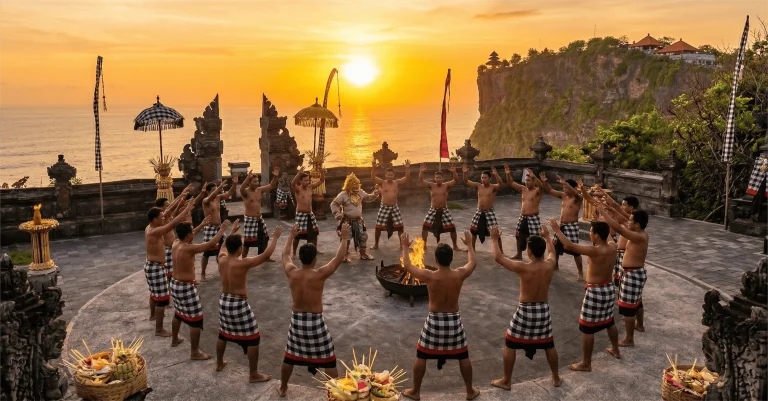
The best activities in Bali combine culture, landscape, and one or two experiences that fit the region where you are staying. A balanced first trip might include a temple visit, a rice-terrace walk, and an Ubud arts stop. Add one beach or snorkelling day and either a waterfall or volcano experience. Do not select ten distant attractions and expect them to fit comfortably into one itinerary.
This guide compares ten activity types by location, effort, and trip style. Use it to build a realistic shortlist, then confirm weather, access, operator terms, and local instructions for your travel date. Conditions around volcanoes, rivers, cliffs, and the sea can change quickly.
Quick comparison: which Bali activities fit your trip?
| Activity | Good base or region | Typical effort | Best for |
|---|
| Temple visit and cultural performance | South Bali, Ubud, or east Bali | Low to moderate walking | Culture, architecture, and ceremony context |
| Rice terraces and subak landscape | Tabanan or Ubud area | Light viewpoint visit to longer walk | Landscape, farming context, and photography |
| Ubud arts, market, and forest | Ubud | Flexible urban and forest walking | Craft, performance, food, and nature in one area |
| Mount Batur sunrise trek | Kintamani | Strenuous, dark, uneven ascent | Fit travellers who want a volcanic hike |
| Waterfall visit | Bangli, Gianyar, or North Bali | Varies from short steps to a demanding trek | Forest scenery and active days |
| Snorkelling or diving | Amed, Menjangan, or Nusa Penida | Water confidence and operator-dependent | Marine life and underwater scenery |
| Surfing or beach time | South and southwest coasts | Relaxed to physically demanding | Ocean time, lessons, or sunsets |
| Nusa Penida viewpoints | Nusa Penida | Driving plus heat, steps, and rough terrain | Dramatic coastlines and a dedicated island day |
| Village and craft experience | Bangli, Gianyar, or east Bali | Low to moderate | Architecture, artisans, and community context |
| Balinese food experience | Available island-wide | Low | Markets, cooking, and regional flavours |
1. Visit a temple with cultural context
Temple visits are among Bali's most meaningful activities when they are approached as active sacred places rather than photo sets. Uluwatu Temple combines a cliff setting with south-coast route planning, while Tirta Empul introduces a living water-temple environment near Tampaksiring. Choose one that fits your route instead of crossing the island only to collect famous names.
Wear clothing that meets the site's current requirements, follow staff directions, keep entrances and prayer areas clear, and ask before photographing people or ceremonies. A performance can add context, but schedules and ticket arrangements may change. If a ceremony affects access, accept the local instruction and use the visit to observe respectfully from the permitted area.
2. Walk through a rice landscape
Jatiluwih Rice Terraces is the stronger choice for travellers who want a broad agricultural landscape and time for a longer rural route. The Ubud-area terraces are more convenient for a central itinerary but are often busier. Rice fields are working land: stay on marked paths, do not enter planted plots, and do not imply that every terrace in Bali is itself inside the UNESCO property.
UNESCO describes Bali's listed cultural landscape as five rice-terrace and water-temple areas connected by the cooperative subak water-management system. That distinction makes a terrace visit more useful when the guide explains farming, water, temples, and community—not only the viewpoint. Conditions and field colour vary with planting and harvest cycles.
3. Build an Ubud arts and nature day
Ubud works best as a cluster rather than a single attraction. Begin with a focused stop such as Ubud Art Market, allow time for a gallery, workshop, or performance, and add the Ubud Monkey Forest only if everyone is comfortable around free-moving macaques.
At the forest, follow the sanctuary's current rules: keep food out of sight, secure loose belongings, avoid touching or cornering animals, and ask staff for help rather than pulling an object away. Traffic and parking can consume much of an overfilled Ubud day, so two or three meaningful stops are usually better than a rushed checklist. The Ubud cultural route shows one way to group compatible places.
4. Hike Mount Batur at sunrise
Mount Batur is a volcanic hike, not simply a sunrise viewpoint. The usual ascent begins in darkness over uneven ground and can be cold or windy near the upper area. It suits travellers with appropriate fitness, footwear, warm layers, a headlamp, and enough time to descend without rushing.
Check official volcanic information through MAGMA Indonesia and the forecast through BMKG. Follow closures and local guide instructions even if another operator or an older social post suggests the route is open. Sunrise, visibility, and summit access are never guaranteed. Travellers wanting an organised option can review the Mount Batur sunrise trek and confirm inclusions before booking.
5. Choose a waterfall that matches your mobility
Bali's waterfalls range from developed viewpoints to steep valley and cliff routes. For a shorter central stop, compare Tibumana, Kanto Lampo, or Blangsinga. For a more demanding North Bali day, Sekumpul or Lemukih may fit. The practical differences are laid out in the 10 Bali waterfalls guide.
After rain, trails can become slippery and rivers may rise even when it is not raining at the entrance. Check the route and water locally, avoid the impact zone beneath falling water, and never assume swimming is permitted or safe because another visitor entered. Secure footwear and a willingness to turn around matter more than completing the planned list.
6. Snorkel or dive with a suitable operator
Amed can suit shore-based snorkelling and diving itineraries in east Bali, while Menjangan Island generally requires a dedicated West Bali route and boat arrangement. Nusa Penida offers striking marine environments but may involve current, swell, and longer transfers. Select the area based on certification, swimming ability, sea conditions, and travel time—not a promised animal encounter.
Ask the operator about licences, guide ratios, equipment, insurance boundaries, entry and exit method, cancellation policy, and the plan if conditions deteriorate. Check maritime information through BMKG Maritime. Do not touch coral, feed wildlife, stand on reefs, or chase animals for photographs.
7. Match a beach activity to the coast
Beach time is not one uniform activity. Kuta Beach offers a convenient place to compare beginner surf lessons, while cliff-facing breaks around the Bukit can require much more experience. Jimbaran Bay better fits a sunset walk and dinner than a serious surf plan. Choose the coast for what you actually want to do.
Use lifeguarded zones where available, observe flags and local warnings, and speak to a qualified instructor before entering unfamiliar surf. Tides, rip currents, wind, and seasonal debris change the experience. Keep valuables minimal and avoid leaving bags unattended while swimming.
8. Plan Nusa Penida as a real island day
Nusa Penida's coastal viewpoints are visually dramatic, but a map can hide rough roads, heat, queues, boat transfers, and steep paths. Kelingking is best treated first as a cliff viewpoint; the descent is a separate physical decision. Crystal Bay may suit a beach or boat itinerary, subject to marine conditions.
Limit the route to one side of the island or a small number of compatible stops. Keep a safe distance from unprotected edges, do not pose beyond barriers, and leave buffer time for the return boat. The Nusa Penida tour outline can help compare route scope, but every water activity remains conditional on current local safety guidance.
9. Spend time in a village or craft community
A village or workshop visit can add the human context missing from a landmark-only itinerary. Penglipuran Village is known for its traditional settlement layout, while Celuk offers a way to learn about silver craft and compare workshop practices. Ask before photographing people, homes, or active work.
Choose visits where hosts explain the place and where purchases are optional and transparent. Do not describe a living community as an untouched attraction. Dress appropriately, keep voices low near ceremonies, and clarify whether demonstrations, donations, or workshop activities have a charge before participating.
10. Explore Balinese food beyond one restaurant
A market walk, cooking session, or guided tasting can connect ingredients with daily life. Ask whether the experience includes market purchasing, hands-on preparation, dietary substitutions, transport, and a written menu. Travellers with allergies should communicate the ingredient and cross-contact risk clearly rather than relying only on a broad label such as vegetarian.
For an independent start, pair a morning market with one regional dish and a locally run food business. Read the Bali food guide for dish ideas, then verify opening times and ingredients directly because vendors and menus change.
How to turn the list into a realistic itinerary
Group by geography first. A practical day normally has one anchor experience and one or two nearby additions. Ubud can combine arts, a market, and a managed forest visit. Bangli can combine a cultural stop with a suitable waterfall. South Bali can pair a temple or coastal viewpoint with a beach sunset. North and West Bali deserve their own days rather than being squeezed between southern stops.
- Low-effort day: one temple, a craft or market stop, and a sunset close to the accommodation.
- Active day: one volcano or demanding waterfall route, followed by a flexible meal or viewpoint.
- Water day: one reputable snorkelling, diving, or surf operator with weather alternatives.
- Family or mixed-mobility day: short transfers, verified facilities, shaded breaks, and an easy cancellation point.
A Bali private driver can make a regional day more flexible, while a custom Bali itinerary is useful when the group has different mobility, food, or activity needs. Confirm route, waiting time, inclusions, local entrance payments, and cancellation terms in writing.
Official planning references
Frequently asked questions
What are the best activities in Bali for a first visit?
Choose one cultural experience, one landscape activity, and one coast or water day that fit your base. For many first trips, that means an Ubud-area day, a temple or rice landscape, and a beach, snorkelling, or surf experience.
How many Bali activities fit into one day?
Usually one anchor activity plus one or two nearby stops. Mountain roads, traffic, parking, walking, meals, weather, and entrance arrangements make four or five distant headline attractions unrealistic.
Which activities are suitable when it rains?
Workshops, galleries, markets, food experiences, and some performances may be more adaptable, but check access and cancellation terms. Avoid treating heavy rain as harmless around rivers, waterfalls, cliffs, volcanoes, or the sea.
Do I need to book Bali activities in advance?
Book capacity-limited guided activities and time-sensitive transfers ahead, especially when equipment or boats are involved. Flexible self-guided stops may not need advance booking, but current opening and access should still be checked.
Should I choose a tour or a private driver?
Choose a specialist tour when instruction, equipment, permits, or safety supervision are central. A private driver is better for flexible sightseeing transport, but driving service alone does not replace a qualified surf, dive, trekking, or activity guide.