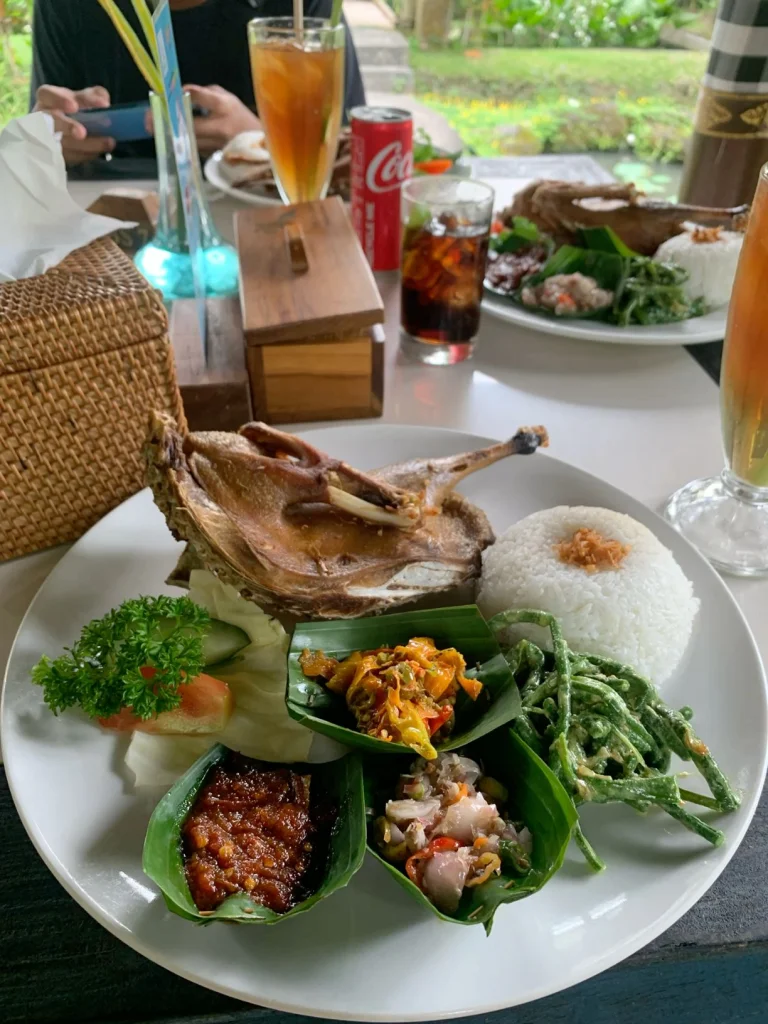
The best way to explore food in Bali is to choose a few Balinese dishes first, then match each meal to the area already on your route. Try a mixed-rice meal or betutu at a local warung. Visit a Denpasar or Ubud market for ingredients and snacks, or compare coastal seafood around Jimbaran and Amed. The cafe districts of Canggu, Seminyak, Sanur, and Ubud suit groups that need broader dietary choices.
Do not assume a dish has one fixed recipe. Meat, seafood, shrimp paste, peanuts, coconut, egg, soy, gluten-containing sauces, and preparation surfaces can vary by cook. If an allergy, religious requirement, or medical diet matters, ask about the exact ingredients and cross-contact before ordering; a dish name alone is not a safety guarantee.
Bali food choices at a glance
| Dish or format | What to expect | Question worth asking |
|---|
| Nasi campur Bali | Rice with several small portions of vegetables, sambal, and protein | Which meats and sambals are included today? |
| Ayam or bebek betutu | Chicken or duck cooked slowly with an aromatic Balinese spice mixture | How spicy is this version, and must it be ordered ahead? |
| Sate lilit | Seasoned minced protein wrapped around a skewer and grilled | Is this batch fish, chicken, pork, or another protein? |
| Lawar | Chopped vegetables, coconut, seasoning, and sometimes meat | What is in this version, and when was it prepared? |
| Babi guling | Spiced roast pork served with rice and assorted sides | Does the mixed plate contain pork in every component? |
| Tipat cantok | Rice cake and vegetables with peanut dressing | Can the seller explain the sauce and preparation surface? |
| Grilled seafood | Fish or shellfish selected and cooked to order in many coastal venues | Is pricing by piece or weight, and what is included? |
| Jaje Bali | A broad family of Balinese cakes and market sweets | Which rice flour, coconut, palm sugar, or filling is used? |
Balinese dishes to understand before ordering
Nasi campur Bali: the practical first plate
Nasi campur is useful for a first meal because it presents several flavours and textures together. A plate commonly starts with rice and may add shredded chicken, sate, vegetables, lawar, egg, peanuts, or sambal, but the composition changes between kitchens and even by time of day. Pointing at a display is convenient; asking what is included is still important.
Indonesia's official tourism portal lists nasi campur, ayam betutu, sate lilit, lawar, nasi jinggo, and tipat cantok among Bali's characteristic foods in its official Bali destination overview. Use that list as cultural context rather than a promise that every vendor prepares the same plate.
Ayam betutu and bebek betutu
Betutu centres on chicken or duck seasoned with a complex spice mixture and cooked until the seasoning penetrates the meat. Preparation can be slow, so a whole bird or a specialist version may require advance ordering. A portion served with rice is easier for a solo traveller. The official Indonesia Travel ayam betutu guide describes slow cooking, common accompaniments, and the variation made with duck.
Sate lilit
Sate lilit differs from cubed satay: minced, seasoned protein is moulded around bamboo or lemongrass and grilled. Fish and chicken versions are common, while some recipes use pork or another meat. Coconut and spices may be mixed into the mince. Bali Province's Ceraken cultural reference on sate lilit also explains its place in Balinese family and ceremonial food traditions.
Lawar, babi guling, and vegetable dishes
Lawar is a family of finely chopped mixtures rather than one universal salad. Vegetables, grated coconut, spices, and meat can appear in different combinations. Ask whether the serving contains pork, animal blood, shrimp paste, or another ingredient relevant to you. Babi guling is explicitly pork, and its rice plate may include several pork preparations and sides made in the same kitchen.
Travellers seeking a vegetable-forward dish can look for tipat cantok or gado-gado, which combine cooked vegetables with rice cake or rice and a peanut-based sauce. These labels still do not guarantee vegan, gluten-free, or allergen-free preparation. Broth, sauces, garnishes, and shared utensils matter as much as the visible vegetables.
Jaje Bali, fruit, coffee, and sambal
Traditional markets often display jaje Bali: colourful cakes or sweets using combinations of rice flour, sticky rice, coconut, banana leaf, and palm sugar. Names and recipes differ locally. Ask a vendor to identify the pieces rather than guessing from colour. Cut fruit, fresh juice, and iced drinks also require the same judgement about handling, clean equipment, water, and storage as any other ready-to-eat food.
Bali coffee ranges from simple finely ground coffee served with sediment to espresso and modern filter preparations. Ask whether a menu price includes tax and service. Sambal can range from mild to extremely hot; request it separately if you are unsure, but remember that the main dish may already contain chilli.
Choose the dining format that fits the meal
Warungs
A warung can be a small family-run eatery, a counter with prepared dishes, or a larger restaurant using the same term. Look at what is being cooked, how popular dishes are replenished, whether hot food is hot, and whether the menu is clear. At a rice counter, ask the price and selected components before the plate is assembled.
Traditional markets
Markets are best approached as working community spaces. Go early for produce and breakfast activity, keep walkways clear, ask before photographing people, and carry small rupiah notes. Denpasar's Pasar Badung is a major market for produce, spices, daily goods, and prepared food; the official Pasar Badung overview gives useful context, but operating patterns and individual stalls can change. Pair it with nearby Pasar Kumbasari only if the wider market district fits your route.
Cafes and restaurants
Cafes can help mixed groups compare plant-based choices, coffee, breakfast, and familiar dishes. Restaurants may offer table service and more time to discuss ingredients, though neither format automatically provides better food-safety or allergy controls. Check current menus directly and reserve only when a venue's own channel confirms the hours, deposit, and cancellation terms.
Where to eat by Bali area
Ubud: markets, Balinese cooking, and broad choice
Ubud works well for travellers who want a mix of local warungs, modern cafes, cooking classes, and a central market stop. Visit Ubud Art Market for the wider town context, then choose meals within walking distance or along the next day's route. Central traffic makes repeated cross-town food trips inefficient, so save map pins by neighbourhood.
Denpasar: market food and everyday city dining
Denpasar offers a stronger everyday-city context than a purpose-built tourism strip. A morning around Pasar Badung can introduce spices, fruit, snacks, and meal components, while evening food activity can follow a different rhythm. Use a driver or carefully planned transport, dress for heat and walking, and keep the visit focused rather than adding it between distant beach stops.
Sanur: an easy coastal food day
Sanur Beach has a long coastal corridor with local dining, cafes, and restaurants suited to a slower day. Walking or cycling can connect some sections, but verify the exact map position because “Sanur” listings may be spread along a substantial north–south area. It is a practical meal base before or after an east-coast transfer.
Seminyak and Canggu: cafe variety with traffic trade-offs
Seminyak and Canggu have dense cafe and restaurant choices, useful for groups with different preferences. The trade-off is road time. Select one compact neighbourhood, walk where safe, and avoid building a “cafe hunt” that requires repeated vehicle trips between both areas.
Jimbaran: seafood with a clear ordering check
Jimbaran Bay is associated with beachfront seafood dining. Before ordering, confirm whether fish and shellfish are priced by item, portion, or weight; ask to see the weight and total; and clarify rice, vegetables, sauce, tax, and service. Sunset can be busy, so choose the experience for the setting as well as the menu and keep weather flexibility.
Amed and East Bali: meals around a longer route
Amed combines small coastal communities, diving and snorkelling bases, and local or visitor-oriented dining. Choice becomes more dispersed than in South Bali. If you have a dietary constraint, discuss it with the accommodation before arrival and carry suitable backup food. Make East Bali an overnight route rather than a meal detour from Canggu or Seminyak.
Food allergies and dietary requirements
No article can certify a Bali dish or venue as allergy-safe. Recipes change, translations can be incomplete, and the same wok, grill, oil, knife, chopping board, or serving spoon may contact multiple ingredients. If exposure could cause a serious reaction, seek medical advice before travel, carry prescribed medication as directed, and choose a kitchen that can explain and manage your needs.
- Name the exact ingredient to avoid instead of relying only on “vegetarian,” “vegan,” or “gluten-free.”
- Ask about sauces, stock, sambal, garnish, cooking oil, and shared equipment.
- Remember that sate lilit and lawar can use different proteins between kitchens.
- Ask whether peanut sauce, shrimp paste, fish sauce, soy sauce, dairy, egg, or wheat-containing sauce is present when relevant.
- Do not eat when staff cannot confidently answer a high-risk allergy question.
- Keep an Indonesian translation of the exact requirement available offline, while recognising that a translation does not control cross-contact.
Practical food-safety checks
Food safety cannot be judged perfectly from appearance, and a busy stall is not proof of safety. Prefer food cooked thoroughly and served hot, avoid raw and cooked items touching, use safe drinking water, and consider how perishable dishes are stored. The WHO Five Keys to Safer Food cover cleanliness, separation of raw and cooked food, thorough cooking, safe temperatures, and safe water and raw materials.
For a traditional market, observe without disrupting vendors: are preparation areas reasonably clean, are raw products separated from ready-to-eat food, and is cooked food protected? WHO also publishes risk-mitigation guidance for traditional food markets. These checks reduce avoidable risk but cannot guarantee an individual meal.
Drink bottled or appropriately treated water when potable tap water is not confirmed. Check that packaged products are sealed and within date. If you become seriously unwell, have persistent symptoms, show signs of dehydration, or experience an allergic reaction, seek qualified medical help instead of depending on a travel article.
Build a food route without wasting the day
Start with the where-to-stay guide and choose food stops inside the regions you already plan to visit. A simple three-part structure works: local breakfast or market, one destination or activity, then a reserved dinner nearby. Keep one flexible meal for a place you discover locally.
For a South Bali day, combine Sanur with Denpasar rather than adding Canggu. For a central day, keep Ubud food stops around an Ubud activity. For a coast-focused evening, pair Jimbaran with the Bukit or airport side of the route. The Bali activities guide helps identify compatible areas.
Food spending varies too widely for one trustworthy daily number. Compare your own mix of warung meals, coffee, seafood by weight, drinks, restaurant tax and service, transport, and reservations. Use the Bali budget guide to build a transparent trip estimate.
Ordering and payment checklist
- Confirm the dish, portion, spice level, and essential ingredients.
- For seafood or other weighed items, confirm the unit, weight, and total.
- Ask whether prices include tax and service.
- Check current opening hours through the venue, not an old listicle.
- Carry some rupiah for small vendors and markets; do not assume every stall accepts cards.
- Ask permission before photographing vendors, kitchens, ceremonies, or customers.
- Decline single-use items you do not need and refill water only from a source you trust.
If food is a central trip priority, a custom Bali itinerary can group markets, regional dishes, and activities into realistic days. A private driver may simplify a multi-stop route, but confirm waiting time, parking, meal breaks, and the final drop-off before departure.
Official references
Frequently asked questions
What food should a first-time visitor try in Bali?
Start with nasi campur for variety, then choose ayam or bebek betutu, sate lilit, a clearly explained lawar, tipat cantok, and a market sweet. Travellers who eat pork may also choose babi guling. Ask about each kitchen's recipe.
Where is the best area for food in Bali?
There is no single best area. Ubud balances Balinese food and cafes, Denpasar offers market and city dining, Sanur is an accessible coastal base, Seminyak and Canggu provide cafe variety, Jimbaran is known for seafood, and Amed suits an East Bali stay.
Is Balinese food vegetarian-friendly?
Vegetable dishes exist, but a visible vegetable base does not establish that the stock, sauce, sambal, garnish, oil, or preparation surface is vegetarian. Ask about the full recipe and shared equipment.
Is Bali street food safe?
No vendor category is automatically safe or unsafe. Apply practical checks around cleanliness, separation, thorough cooking, temperature, and water, and avoid a meal when handling or ingredient answers concern you.
How much should I budget for food in Bali?
Build a personal estimate from the dining formats you will actually use. A day of simple warung meals differs substantially from specialty coffee, imported drinks, seafood by weight, and full-service restaurants with tax and service.