For most first-time visitors, the best place to stay in Bali is not one neighbourhood for the entire trip. A split stay—usually Ubud plus one coastal area—reduces exhausting day trips and gives you two genuinely different sides of the island. Choose Ubud for culture and inland landscapes; Sanur for a calm, practical coast; Seminyak for restaurants and nightlife; Uluwatu for cliffs and surf; Nusa Dua for an organized resort stay; or Jimbaran for a quieter beach base near the airport.
Bali is an island, a province, and a collection of tourism areas with very different geography. “Close” on a map does not always mean quick in traffic. The right base depends on what you want to do after breakfast, how often you are willing to sit in a vehicle, whether you need walkability, and who is travelling with you. This guide compares the main areas without assuming that one district fits everyone.
Quick answer: the best Bali areas by traveller type
Traveller or priority
Best starting area
Why
Main trade-off
First trip with culture and beach
Ubud + Sanur
Balanced inland and coast experience
Requires one hotel move
Couples and honeymoon
Ubud + Uluwatu or Jimbaran
Nature, villas, cliffs, and sunset
Uluwatu is spread out
Families with young children
Sanur or Nusa Dua
Calmer pace and resort/family infrastructure
Less nightlife
Restaurants, shopping, nightlife
Seminyak
Dense hospitality and entertainment area
Traffic and a busier atmosphere
Surf, cafés, social scene
Canggu
Surf-oriented coast and modern dining
Congestion and limited cross-area convenience
Surf and dramatic beaches
Uluwatu
Cliffs, coves, surf breaks, sunset
Stairs and car-dependent layout
Organized luxury resort
Nusa Dua
Integrated resorts and South Bali access
Can feel separated from everyday Bali
Budget, airport convenience, beginner surf
Kuta
Large accommodation range and central services
Busy urban-beach environment
Quiet final nights near the airport
Jimbaran
Bay, seafood, and practical airport access
Fewer walkable nightlife options
If accommodation value is a major factor, compare transport, food, and activity trade-offs too in our practical Bali budget guide.
The most important rule: choose by daily geography
Start with the experiences you care about, then choose accommodation. Staying in Ubud for Ubud Palace, rice terraces, water temples, museums, and central-Bali scenery makes sense. Staying in Ubud while planning daily beach clubs in Uluwatu does not. The reverse is equally inefficient: a villa on the Bukit Peninsula is a poor base for repeated early trips to Tegallalang or Kintamani.
Search results often describe Bali areas by mood alone—“romantic,” “vibrant,” or “relaxing.” Mood matters, but route logic matters more. Evaluate four questions:
Which two or three places do you expect to visit most?
Do you need to walk to restaurants and shops?
How many hotel moves can your group tolerate?
Is your final base practical for the airport, harbour, or next island?
Ubud: best for culture, rice fields, wellness, and inland day trips
Ubud is the strongest inland base for a first visit. Its centre connects visitors with Ubud Palace, Ubud Art Market, museums, performance venues, restaurants, and the Sacred Monkey Forest Sanctuary. The wider Ubud area provides access toward Tegallalang, Tirta Empul, Kintamani, craft villages, rivers, and waterfalls.
Who should stay in Ubud?
First-time visitors who want Balinese art, temples, dance, and inland landscapes.
Couples seeking villas, wellness, and a slower evening atmosphere.
Travellers planning rafting, rice-terrace, craft-village, or Kintamani routes.
Visitors who prefer cafés, galleries, and cultural activities over beach nightlife.
Central Ubud versus the outskirts
Central Ubud is better if you want to walk to dinner, performances, the palace, market, or Monkey Forest. It is also noisier and more congested. Outlying villages can offer rice-field or valley settings, larger properties, and quieter nights, but the phrase “Ubud hotel” may describe accommodation a substantial drive from the centre. Check the exact map pin, access road, shuttle schedule, and ride pickup policy before booking.
Ubud’s main limitations
Ubud has no beach, and repeated trips to South Bali consume time. Pavements can be uneven or absent, traffic is heavy at popular junctions, and a remote villa may require transport for every meal. Humidity, rain, insects, steps, and open-air architecture should also be considered when choosing a room.
Ubud Palace is a central heritage and performance landmark. Image via Wikimedia Commons, CC BY-SA 4.0.
Sanur: best all-round coastal base for calm pace and practical access
Sanur runs along Bali’s east-facing coast and is known for sunrise, a long beachfront corridor, restaurants, hotels across several price levels, and access to fast boats serving the Nusa islands. Its atmosphere is generally more relaxed than Kuta, Seminyak, or Canggu, making it one of the safest recommendations when a first-time visitor has not yet developed a strong area preference.
Who should stay in Sanur?
Families, older travellers, and couples wanting a calmer base.
Visitors planning a Nusa Penida or Nusa Lembongan departure.
People who value a beachfront walking route and nearby dining.
Travellers who want reasonable access to Denpasar, Ubud, and South Bali without staying in a nightlife district.
Sanur’s main limitations
Sanur is not the best choice for west-facing sunsets, major nightlife, or powerful surf. Water depth and swimming conditions vary with tide, reef, weather, and the exact beach section. Fast-boat convenience is valuable, but harbour traffic and morning departures can make nearby roads busy.
Sanur Beach shoreline and breakwater; photo via Wikimedia Commons, CC0.
Seminyak: best for dining, shopping, beach clubs, and nightlife
Seminyak suits travellers who want a west-coast sunset area with a dense selection of restaurants, bars, shops, spas, villas, and hotels. The broader Seminyak–Petitenget corridor includes very different micro-locations: beachfront properties, busy dining streets, quieter lanes, and accommodation that looks close on a map but requires a long walk around private compounds or traffic.
Who should stay in Seminyak?
Couples and groups prioritizing restaurants, nightlife, and shopping.
Travellers who want a polished west-coast tourism area.
Visitors who plan more time around the hotel, beach, spa, and nearby venues than on distant day trips.
What to check before booking
Ask whether the property is genuinely walkable to the places you care about, not merely “five minutes from Seminyak” by an optimistic listing. Check late-night noise, construction reviews, vehicle access, drainage and flooding comments during wet periods, and whether a villa lane can accommodate your transfer vehicle.
Seminyak’s main limitations
Congestion can make cross-island sightseeing frustrating. The beach is exposed to open-ocean conditions, and it is not automatically suitable for swimming. Seminyak is also usually less convenient than Sanur for early fast boats and less convenient than Jimbaran or Nusa Dua for repeated Bukit Peninsula trips.
Seminyak Beach Bali — gallery image 2
Canggu: best for surf culture, cafés, nightlife, and longer social stays
Canggu Beach and the surrounding Berawa–Batu Bolong–Echo Beach corridor attract surfers, remote workers, café-focused travellers, fitness communities, and nightlife visitors. Canggu is not one compact walkable village; different neighbourhoods have different road connections, noise levels, and beach access.
Who should stay in Canggu?
Surfers who understand local conditions or plan professional lessons.
Longer-stay visitors who value coworking, cafés, fitness, and social venues.
Groups that expect to spend most of their time within the Canggu area.
Canggu’s main limitations
Road congestion is the central trade-off. A cheap or beautiful villa can become inconvenient if every activity requires crossing a bottleneck. Pavements are inconsistent, scooter traffic can feel intense, and repeated day trips to Ubud, Uluwatu, Sanur, or Nusa Dua may turn the holiday into commuting. Families should evaluate pool safety, traffic exposure, beach conditions, and nighttime noise carefully.
Canggu Beach Bali — gallery image 2
Uluwatu and the Bukit Peninsula: best for cliffs, surf, beaches, and couples
“Uluwatu” is often used loosely for a broad part of the Bukit Peninsula, including areas around Pecatu, Bingin, Padang Padang, Suluban, and nearby cliff roads. The landscape is dramatically different from Ubud or Sanur: limestone cliffs, coves, surf breaks, sunset viewpoints, and villas dispersed across hilly roads. Pura Uluwatu is the major cultural landmark, but it is not within walking distance of every property marketed as Uluwatu.
Who should stay in Uluwatu?
Couples and honeymooners prioritizing views, villas, and sunset.
Experienced surfers choosing accommodation around a specific break.
Travellers happy to use a driver, taxi, or legal rental vehicle between venues.
Uluwatu’s main limitations
The area is spread out and generally less walkable. Many beaches require significant stairs, exposed paths, or tide awareness. Travellers with limited mobility should verify steps, lift access, road gradients, and the exact vehicle drop-off point. Restaurants and beach clubs can be geographically close yet slow to reach by road.
Pura Uluwatu Bali — gallery image 2
Nusa Dua: best for integrated resorts, families, and low-friction luxury
Nusa Dua is designed around organized tourism infrastructure, major resorts, convention facilities, landscaped public areas, and beaches along Bali’s southeast coast. It works well for travellers who want many holiday needs handled within or near the resort rather than negotiating a new neighbourhood every day.
Who should stay in Nusa Dua?
Families wanting resort facilities and a controlled pace.
First-time Asia visitors seeking familiar hospitality infrastructure.
Conference travellers and guests attending events in the area.
Couples who value pools, spas, and beach time more than nightlife.
Nusa Dua’s main limitations
The integrated resort environment can feel removed from village life and independent exploration. Dining and activities inside high-end properties may cost more than local alternatives. Nusa Dua is convenient for parts of South Bali but still a long base for daily Ubud, Kintamani, North Bali, or far-east excursions.
Nusa Dua Beach Bali — gallery image 2
Jimbaran: best for a quieter bay, seafood, couples, and airport convenience
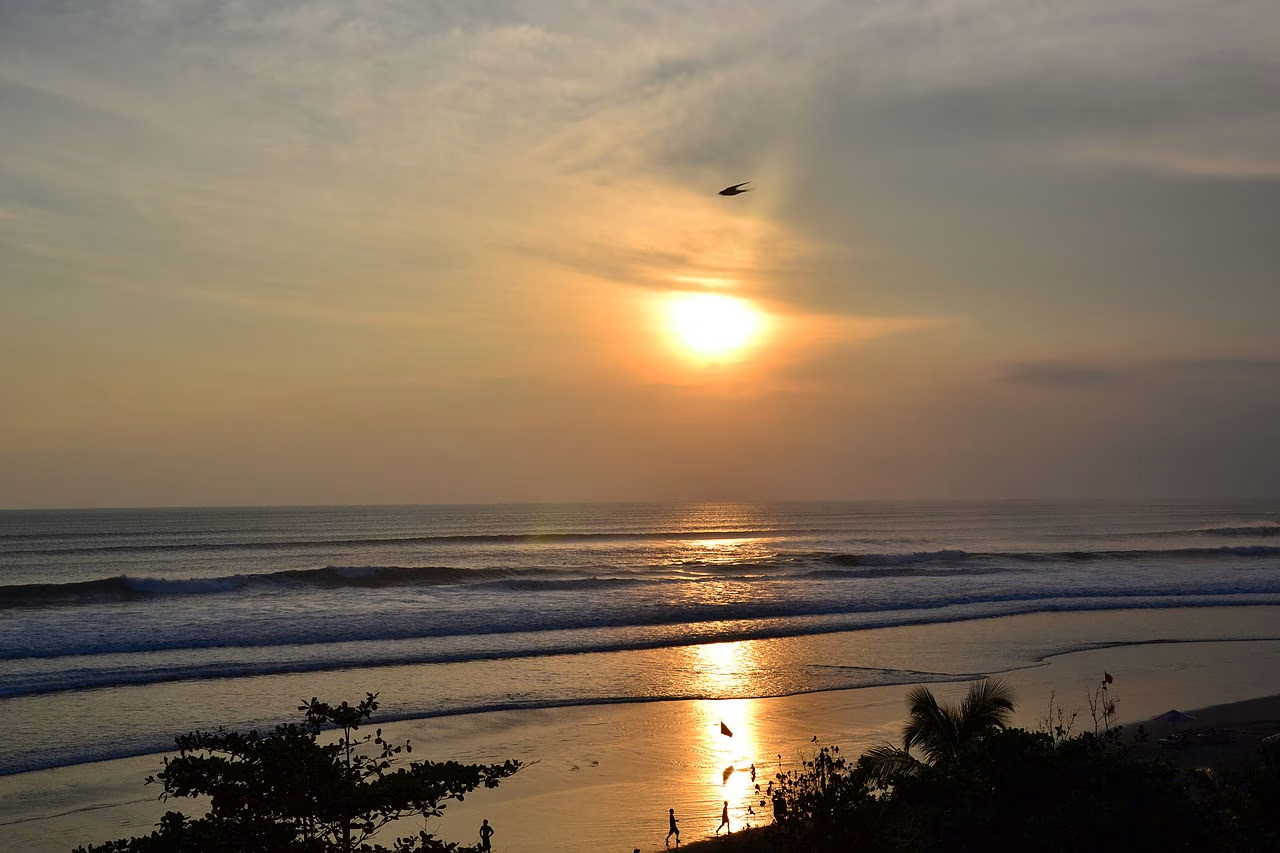
Jimbaran Bay offers a west-facing beach, seafood dining, accommodation from modest stays to luxury resorts, and relatively practical access to the airport and Bukit Peninsula. It is a useful final base after Ubud because it reduces the distance to departure while retaining a beach atmosphere.
Who should stay in Jimbaran?
Couples who prefer a quieter sunset base to Seminyak or Canggu.
Travellers planning Uluwatu, southern beaches, or an early flight.
Families who choose a property with appropriate pool and beach access.
Jimbaran’s main limitations
Jimbaran is not a single compact strip. Some properties sit near the sand, others on hills or inland roads. Nightlife and shopping are less concentrated than in Seminyak, and not every bay section has the same swimming, restaurant, or pedestrian conditions. Confirm the precise location.
Wide view across the sheltered bay. Image via Wikimedia Commons, CC BY 2.0.
Kuta: best for budget range, airport proximity, shopping, and beginner surf access
Kuta Beach remains one of Bali’s most accessible tourism districts, with a broad range of hotels, restaurants, shops, nightlife, surf lessons, and services close to the airport. It can be a sensible first or final night, especially for a late arrival, early departure, or traveller who values convenience over seclusion.
Beginner surfers using an established school in suitable conditions.
Travellers who want shopping and services within a mature tourism district.
Short-stay visitors who need to remain near the airport.
Kuta’s main limitations
Kuta is busy, commercial, and urban. Traffic, vendors, nightlife noise, and crowds vary by street and season. The open coast can have currents and strong surf; swim only in supervised areas and obey flags. Travellers seeking quiet rice fields or a secluded beach should choose another base.
A surfer riding a wave at Kuta Beach; photo by Jordy Meow via Wikimedia Commons, CC BY 3.0.
Areas that are excellent—but not always ideal as a first and only base
Sidemen and East Bali
Sidemen suits slow travel, valley scenery, village stays, and access toward East Bali. It is rewarding for travellers who accept fewer urban services and longer transfers to the airport or west coast. Use it as a deliberate retreat, not as a central base for daily trips across the entire island.
Amed
Amed is best for diving, snorkeling, volcanic-coast scenery, and a quieter rhythm. It requires a substantial road transfer from South Bali and deserves multiple nights. It is rarely the most efficient place for a first-time visitor who also wants Ubud, Seminyak, and Uluwatu in a short trip.
Lovina and North Bali
North Bali offers a different coast, waterfalls, lakes, temples, and access to quieter landscapes. The mountain crossing makes it unsuitable as a casual side trip from South Bali. Stay overnight when the northern region is a real priority.
Nusa Penida
An overnight stay on Nusa Penida allows more time than a mainland day trip, but roads, stairs, harbour transfers, and changing sea conditions make it a more demanding base. First-time visitors should understand the logistics before committing several nights.
Recommended split stays by trip length
Three to five nights
Choose one base, or at most two if the transfer supports your route. Ubud alone works for culture and inland activities. Sanur alone works for a gentle coast and selective day trips. Jimbaran or Nusa Dua works for a resort and South Bali trip. Avoid spending a short holiday checking in and out repeatedly.
Seven nights
The strongest first-time structure is three or four nights in Ubud followed by three or four nights in Sanur, Jimbaran, Seminyak, Uluwatu, or Nusa Dua. Choose the coastal base according to your priority. The published realistic seven-day Bali itinerary uses Ubud plus Sanur/South Bali and keeps Nusa Penida optional.
Ten nights
Use two or three bases. A balanced combination is four nights Ubud, three nights Sanur or Seminyak, and three nights Jimbaran, Uluwatu, or Nusa Dua. If North or East Bali matters, replace one southern base rather than adding a fourth hurried move.
Fourteen nights or longer
Three or four bases become reasonable when each area receives several nights. Consider Ubud, one west- or east-coast tourism area, and a deliberate regional stay such as Sidemen, Amed, North Bali, Uluwatu, or Nusa Penida. Build recovery time after long transfers or boat days.
Relative area comparison
Area
Walkability*
Nightlife
Beach focus
Inland day trips
Typical budget tendency
Ubud centre
Moderate
Low–moderate
None
Excellent
All levels
Sanur
Moderate–good
Low
Calm coastal pace
Good
All levels
Seminyak
Variable
High
Sunset/open coast
Moderate
Mid–high
Canggu
Variable
High
Surf/open coast
Moderate
Mid–high
Uluwatu
Low
Moderate
Cliffs, coves, surf
Low
Mid–luxury
Nusa Dua
Good inside resort zones
Low
Resort beaches
Low–moderate
Mid–luxury
Jimbaran
Variable
Low–moderate
Bay and sunset
Low–moderate
All levels
Kuta
Moderate
High
Surf and sunset
Moderate
Budget–mid
*Walkability varies by the exact property, road, pavement, heat, rain, and mobility needs. Always inspect the real map pin and recent access information.
Approximate transfer planning between major areas
Route
Conservative planning window
Why it varies
Airport to Kuta or Jimbaran
About 20–60+ minutes
Arrival processing, exact hotel, traffic
Airport to Seminyak
About 45–90+ minutes
West-coast congestion
Airport to Canggu
About 60–120+ minutes
Route bottlenecks and peak hours
Airport to Sanur or Nusa Dua
About 30–75+ minutes
Toll/route choice and traffic
Airport to central Ubud
About 1.5–2.5+ hours
Traffic and exact Ubud location
Ubud to Sanur
About 45–90+ minutes
Central-Ubud traffic and route
Seminyak to Uluwatu
About 1–2+ hours
South Bali congestion
Canggu to Ubud
About 1–2+ hours
Starting neighbourhood and bottlenecks
These ranges are for itinerary design, not guaranteed transfer quotes. Weather, ceremonies, construction, events, and time of day can change them significantly. Check live navigation and ask your accommodation or driver on the day.
How to choose the exact hotel, villa, or guesthouse
Verify the real map pin
Area names are used loosely in accommodation marketing. Confirm the street, pedestrian route, driving access, and distance to your actual priorities. A straight-line distance does not reveal walls, rivers, one-way streets, private compounds, or missing pavements.
Read reviews by problem, not only score
Search recent reviews for construction, road noise, nightclub noise, mould, drainage, insects, water pressure, air-conditioning, Wi-Fi, accessibility, pool safety, and vehicle access. A high average score can hide an issue that matters specifically to your group.
Match the property to the season
Open-air bathrooms and jungle settings can feel romantic but may bring humidity, insects, slippery paths, and rain exposure. A west-facing beach property offers sunset but not guaranteed swimmable water. During busy periods, location and confirmed transport become more important.
Confirm legal and practical details
Bali’s official visitor code asks foreign travellers to use legal accommodation and official transport. Confirm the property’s booking channel, payment terms, cancellation rules, taxes, check-in process, and contact details. Be cautious when asked to move payment to an unfamiliar account or messaging profile.
Ask accessibility questions precisely
“Accessible” can mean different things. Ask about step-free access from vehicle to room, lift dimensions, bathroom layout, shower entry, pool access, pathway surfaces, emergency evacuation, and whether restaurants or beaches require stairs.
Common first-timer accommodation mistakes
Booking all nights in one distant villa: beautiful accommodation can create hours of daily commuting.
Changing hotels every night: packing, checkout, luggage storage, and check-in consume the time saved.
Choosing only by Instagram view: the property may have steep access, no nearby dining, or difficult vehicle pickup.
Ignoring noise: beach clubs, bars, traffic, ceremonies, animals, and construction affect different areas.
Assuming every beach is safe for swimming: tides, reefs, currents, surf, and seasonal conditions vary.
Planning an early boat from the wrong coast: staying near Sanur before a morning Nusa-island departure reduces risk.
Staying far from the airport on the final night: a long Ubud, Amed, or North Bali transfer creates avoidable stress.
Frequently asked questions
What is the best area to stay in Bali for the first time?
If choosing only one area, Sanur is a practical all-round coastal base and Ubud is the strongest cultural base. For seven nights or more, combining Ubud with Sanur, Jimbaran, Seminyak, Uluwatu, or Nusa Dua usually provides a better introduction than staying in one place.
Is Ubud or Seminyak better for first-time visitors?
Ubud is better for temples, art, rice terraces, wellness, and inland day trips. Seminyak is better for restaurants, shopping, nightlife, and west-coast sunset. They are complementary rather than interchangeable, so split the stay when time allows.
Is Sanur or Nusa Dua better for families?
Sanur offers a more connected neighbourhood feel, a beachfront corridor, dining variety, and Nusa-island harbour access. Nusa Dua offers a more integrated resort environment. The better choice depends on whether your family values independent exploration or resort convenience.
Should I stay in Canggu or Seminyak?
Canggu suits surf, cafés, fitness, remote-work culture, and a younger social scene. Seminyak suits established restaurants, shopping, spas, and nightlife in a mature tourism district. Both can be congested; choose the exact neighbourhood carefully.
Where should honeymooners stay in Bali?
A strong combination is Ubud plus Uluwatu or Jimbaran. Ubud provides villas, culture, and inland scenery; the southern coast adds sunset, beaches, and easier airport access. Seminyak is a better coastal choice when dining and nightlife matter most.
Where should I stay before a Nusa Penida day trip?
Sanur is usually the most practical mainland base for departures from Sanur Harbour. Confirm the exact operator, check-in point, departure time, pickup inclusion, and return harbour because services can change.
Where should I stay for an early flight from Bali?
Kuta, Tuban, Jimbaran, and some airport-side areas are generally more practical than Ubud, Canggu, North Bali, or East Bali. Still allow for traffic, airline check-in rules, baggage, and international departure procedures.
How many hotel bases should I use in one week?
Two bases are usually enough: Ubud plus one coastal area. Three can work when each move has a clear purpose, but frequent changes reduce time and increase logistical risk.
Final recommendation
For a first visit of seven nights, begin with three or four nights in Ubud, then move once to the coast. Choose Sanur for the most balanced and practical finish, Jimbaran for sunset and airport convenience, Seminyak for dining and nightlife, Uluwatu for cliffs and surf, or Nusa Dua for an organized resort stay. This approach respects Bali’s geography and lets each half of the trip feel different.
If your flights, group needs, and wish list do not fit a standard split, use the Bali custom-trip planner. For airport transfers, hotel changes, and geographically dispersed sightseeing, arrange a private driver in Bali.
Research and operational review completed 6 September 2026. Area conditions, travel times, businesses, access, and transport arrangements can change. The transfer windows are conservative planning estimates rather than guarantees. Featured image: rice fields in Ubud via Wikimedia Commons, CC BY-SA 4.0. Individual in-article credits and licences appear in each caption.
From private tours to fully custom itineraries — we handle everything so you can focus on the experience. Tell us your dates and we'll take care of the rest.






.jpg "View across Jimbaran Bay")