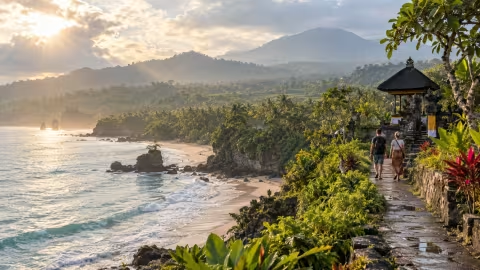
A realistic Bali itinerary for 7 days should use two main bases rather than changing hotels every night. For most first-time visitors, three nights around Ubud followed by three nights in Sanur, Jimbaran, or another South Bali base creates a balanced trip: culture and rice terraces first, then coast, sunset, and an optional Nusa Penida day trip. The plan below is deliberately paced around Bali’s geography and unpredictable traffic.
This itinerary is written for seven calendar days and six nights. If your arrival is late or your departure is early, treat the trip as five full sightseeing days and remove an optional stop rather than compressing the schedule. All travel-time estimates are planning windows, not guarantees.
Bali itinerary 7 days at a glance
Day
Base
Main plan
Pace
1
Ubud
Airport transfer, check-in, gentle palace or ridge-walk option
Easy
2
Ubud
Ubud Palace, Art Market, Monkey Forest, optional Campuhan walk
Transfer with one craft, museum, wildlife, or waterfall stop
Easy–moderate
5
Sanur or South Bali
Nusa Penida day trip, or a slower Sanur/Denpasar day
Intense or easy
6
South Bali
South-coast beach, Uluwatu Temple, Jimbaran sunset dinner
Moderate
7
Departure
Flexible beach or shopping time, then airport with a large buffer
Easy
Best for: first-time visitors who want culture, landscapes, a beach base, and one island or coastal adventure. Not ideal for: travellers who want a slow resort holiday, families with very young children who dislike long drives, or visitors with mobility limitations who plan to descend steep Nusa Penida paths.
Is seven days enough for Bali?
Seven days is enough for a rewarding introduction, but not enough to “complete” Bali. The island’s map can be misleading: narrow roads, ceremonies, construction, rain, and peak-hour traffic can turn a short distance into a long transfer. A good one-week itinerary therefore chooses regions, not a checklist of famous photographs.
This plan gives Ubud three nights because central Bali contains several distinct experiences within a manageable radius: royal and market areas, museums, forest, rice terraces, water temples, craft villages, and access toward Kintamani. The second half moves closer to Sanur and the southern peninsula, reducing the risk of missing a fast boat or outbound flight because of a cross-island drive.
What this itinerary intentionally skips
It does not attempt to combine Ubud, Canggu, Seminyak, Uluwatu, Nusa Dua, North Bali, East Bali, and Nusa Penida in one week. North Bali and far East Bali deserve separate days or another trip. Canggu and Seminyak can replace Sanur if dining and nightlife are more important, but adding both as extra hotel bases usually costs more time than it creates value.
Where to stay for this seven-day route
Nights 1–3: Ubud
Choose central Ubud if walking access to restaurants, Ubud Palace, and the market matters. Choose the outskirts if you value rice-field atmosphere, a larger villa, and quieter evenings; expect to use a driver or hotel shuttle more often. Before booking, check the exact road access because “Ubud” is used for a broad area, not only the compact centre.
Nights 4–6: Sanur, Jimbaran, or another South Bali base
Sanur is the most practical choice for this exact route because its harbour serves Nusa Penida boats and its beachfront is calmer in character than the west-coast nightlife areas. Jimbaran is better if the final priority is seafood, airport access, and the Bukit Peninsula. Seminyak suits dining and nightlife, while Nusa Dua suits a resort-focused finish. Pick one base rather than moving again.
Day 1: Arrive in Bali and settle into Ubud
After immigration, baggage collection, and meeting your transfer, travel directly to Ubud. The airport-to-Ubud drive often requires roughly 90 minutes to well over two hours, depending on your hotel, weather, and traffic. Do not schedule a prepaid performance or distant attraction immediately after an international arrival.
If you arrive before midday
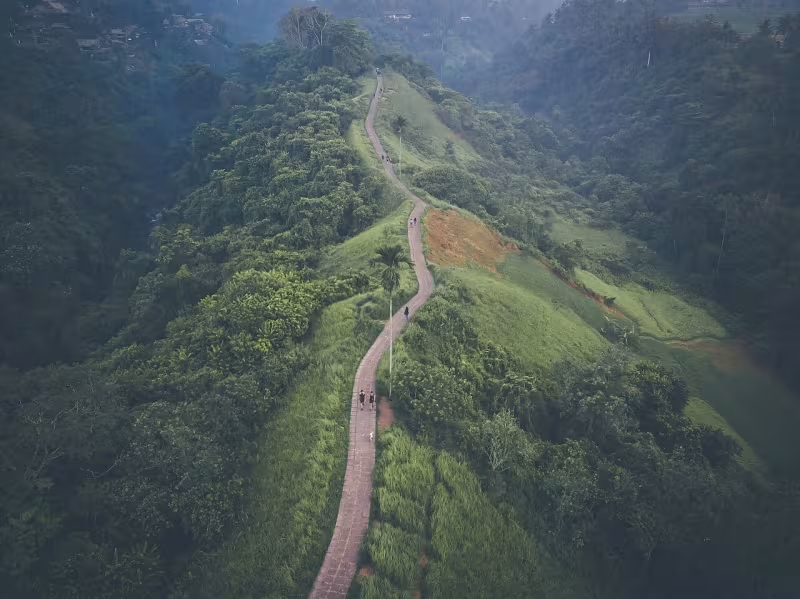
Check in or leave your luggage, eat nearby, and choose one gentle activity. The most efficient central combination is Ubud Palace and Ubud Art Market, which face the same central junction. If you would rather walk in open scenery, visit Campuhan Ridge Walk in cooler late-afternoon conditions.
If you arrive after 3:00 p.m.
Make arrival the activity: check in, exchange or withdraw money through a legitimate channel, eat near the hotel, and sleep. Moving the palace or ridge walk to Day 2 is better than beginning the trip exhausted.
Puri Saren Agung, the historic Ubud Palace complex; Wikimedia Commons, CC BY-SA 4.0. Wikimedia Commons.
Day 2: Central Ubud culture, market, and forest
Keep this day geographically compact. Start around Ubud Palace before the centre becomes busiest, then browse Ubud Art Market with enough time to compare quality and prices. The market is not only a souvenir stop; it is a useful introduction to textiles, baskets, carvings, and the relationship between craft villages and Ubud’s visitor economy.
Late morning: choose a museum or neighbourhood walk
Visit the Sacred Monkey Forest Sanctuary when you have the energy to walk carefully. The macaques are wild animals, not props. Secure food, drinks, sunglasses, loose jewellery, and small objects; follow staff instructions; do not tease, feed, grab, or stare closely at a monkey. Families should keep children beside an adult.
Dense forest vegetation and a stream inside the sanctuary; photo: Wikimedia Commons, CC BY-SA 4.0.
Evening: performance or an early dinner
Traditional performances are staged at several Ubud venues, but schedules and venues can change. Confirm the same-day programme locally instead of relying on an old blog timetable. If jet lag remains, choose dinner and rest; Day 3 begins earlier.
Day 3: Tegallalang, Tirta Empul, and the Kintamani direction
Day 3 travels north and northeast of Ubud. Leaving early reduces heat and traffic and provides better conditions at exposed viewpoints. A private car with a local driver is useful on this route because the stops are dispersed and public point-to-point connections are limited.
Stop 1: Tegallalang Rice Terraces
Begin at Tegallalang Rice Terraces. The landscape is cultivated farmland shaped by Balinese water-management traditions, not merely a photo set. Paths, viewpoints, commercial entrances, and field conditions can change. Wear shoes with grip, ask before entering working plots, and respect any clearly displayed local contribution or access arrangement.
A broad view of the Tegallalang rice terrace landscape; Wikimedia Commons, CC BY-SA 4.0. Wikimedia Commons.
Stop 2: Tirta Empul
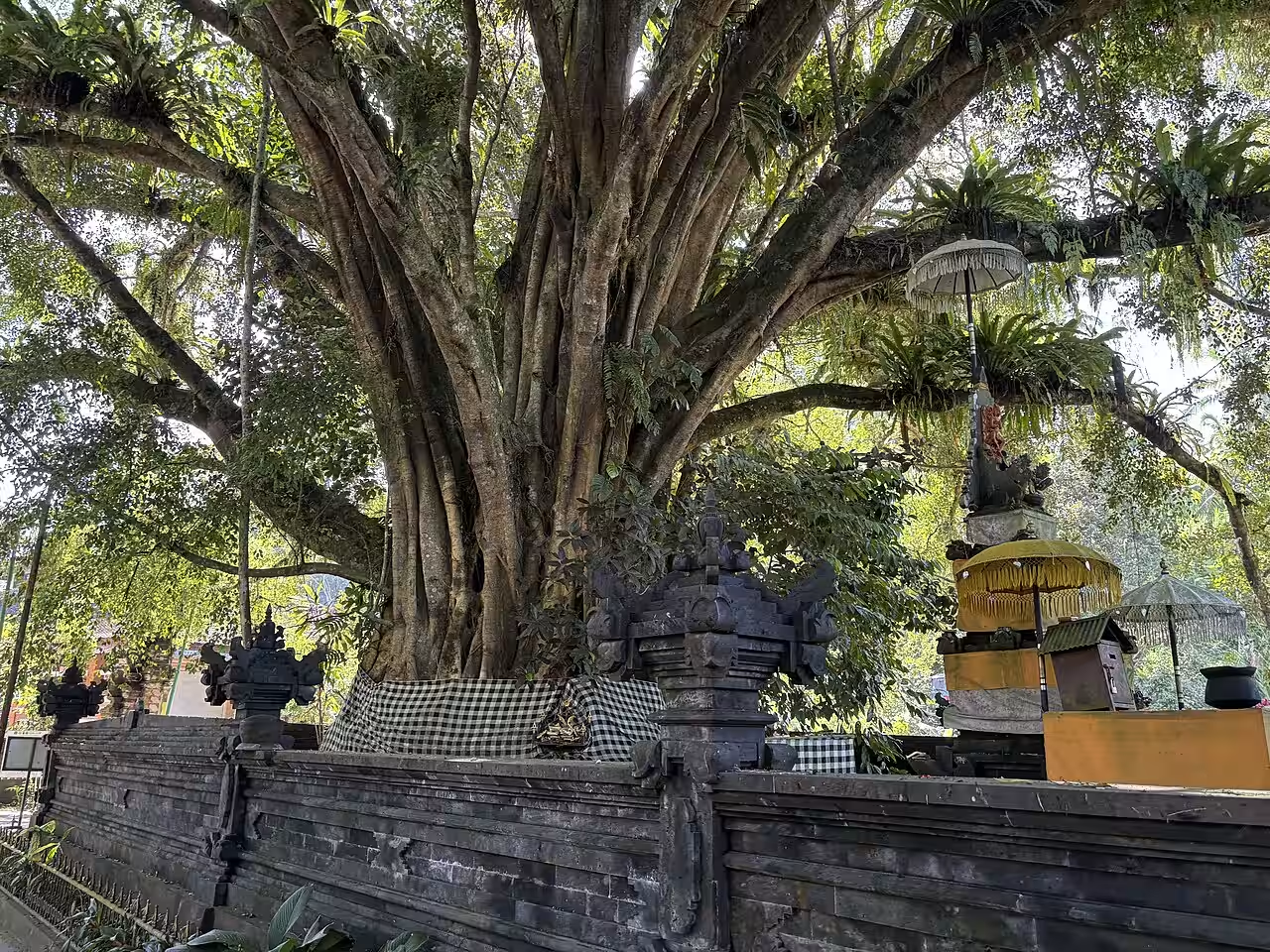
Continue toward Pura Tirta Empul, an active Hindu water-temple complex. Dress modestly, use the required sarong or sash, and follow temple instructions. The purification pools have religious meaning; entering them should not be treated as a casual photo activity. Not every fountain has the same ritual use, so ask an authorized local guide or temple attendant before participating.
Pura Tirta Empul Bali — gallery image 1
Optional Stop 3: Kintamani and Lake Batur views
If weather is clear and the group still has energy, continue toward Kintamani for views across the Batur caldera. This is an optional extension, not a mandatory box. Cloud can obscure the volcano, and extending to Kintamani increases the drive back to Ubud. Travellers who prefer a slower cultural day should stop after Tirta Empul and return via a craft village or café.
Do not combine this with a rushed Mount Batur sunrise trek
A sunrise trek requires a very early departure and changes the rhythm of the entire day. If hiking Mount Batur is a priority, make it the main activity, return for rest, and remove at least one later stop.
Day 4: Transfer from Ubud to Sanur or South Bali
Changing hotels does not need to waste a day. After breakfast, check out and choose one meaningful stop on the route south. Suitable options depend on your interests:
Bali Bird Park for families or wildlife-focused visitors.
A waterfall only if the group can manage steps, wet surfaces, and extra changing time.
Arrive in Sanur by mid- or late afternoon, check in, and slow down. Walk part of the beachfront path, watch local boats, and prepare only the items needed for the next day. If you have booked a Nusa Penida trip, reconfirm pickup, harbour, boat operator, return arrangements, and what is included.
Sunrise and traditional jukung boats at Sanur Beach; photo via Wikimedia Commons, CC BY-SA 4.0.
Day 5: Nusa Penida day trip—or a slower mainland alternative
A Nusa Penida day trip can be spectacular, but it is the most demanding day in this itinerary. Indonesia’s official tourism portal describes fast-boat crossings from Sanur as typically around 30–45 minutes, depending on conditions. That number excludes hotel pickup, harbour check-in, boarding, delays, disembarkation, and road travel on Nusa Penida.
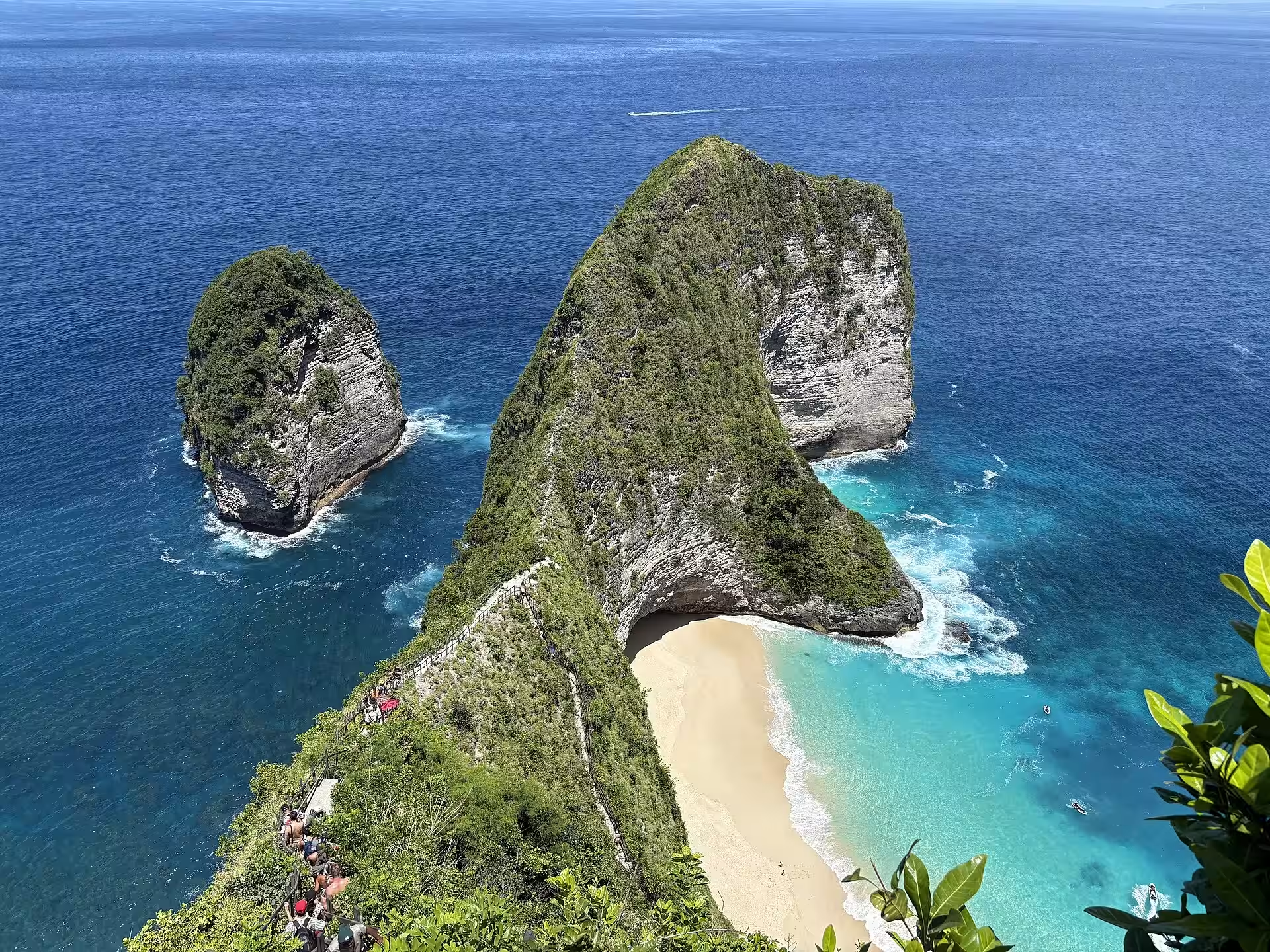
For a day trip, treat cliff viewpoints as the main experience. Descending to beaches can require steep stairs, strong fitness, significant time, and a difficult climb back in tropical heat. Never approach cliff edges for photographs, and never enter exposed natural pools or rough water against local warnings.
The Kelingking headland and cove from the upper viewpoint. Photo: Chainwit., Wikimedia Commons, CC BY 4.0.
Who should skip the Nusa Penida day trip?
Consider staying on mainland Bali if anyone in the group is uncomfortable with boat motion, rough roads, early starts, heat, steep terrain, or a long tightly scheduled day. Families with toddlers, some older travellers, pregnant travellers, and visitors with mobility limitations may enjoy a slower alternative more.
Slower alternative: Sanur and Denpasar
Start with sunrise or a relaxed morning at Sanur, then visit Museum Le Mayeur when open, explore a Denpasar market or museum, and return to the coast. This version leaves more energy for Day 6 and is safer when marine conditions are poor.
Day 6: South Bali beach, Uluwatu Temple, and Jimbaran
Use the morning for a beach or an unhurried start. Beach access and swimming suitability vary across the Bukit Peninsula: some coves involve long stairways, tides affect usable sand, and open-ocean conditions can be dangerous. Choose according to mobility and current sea conditions, not only social-media photographs.
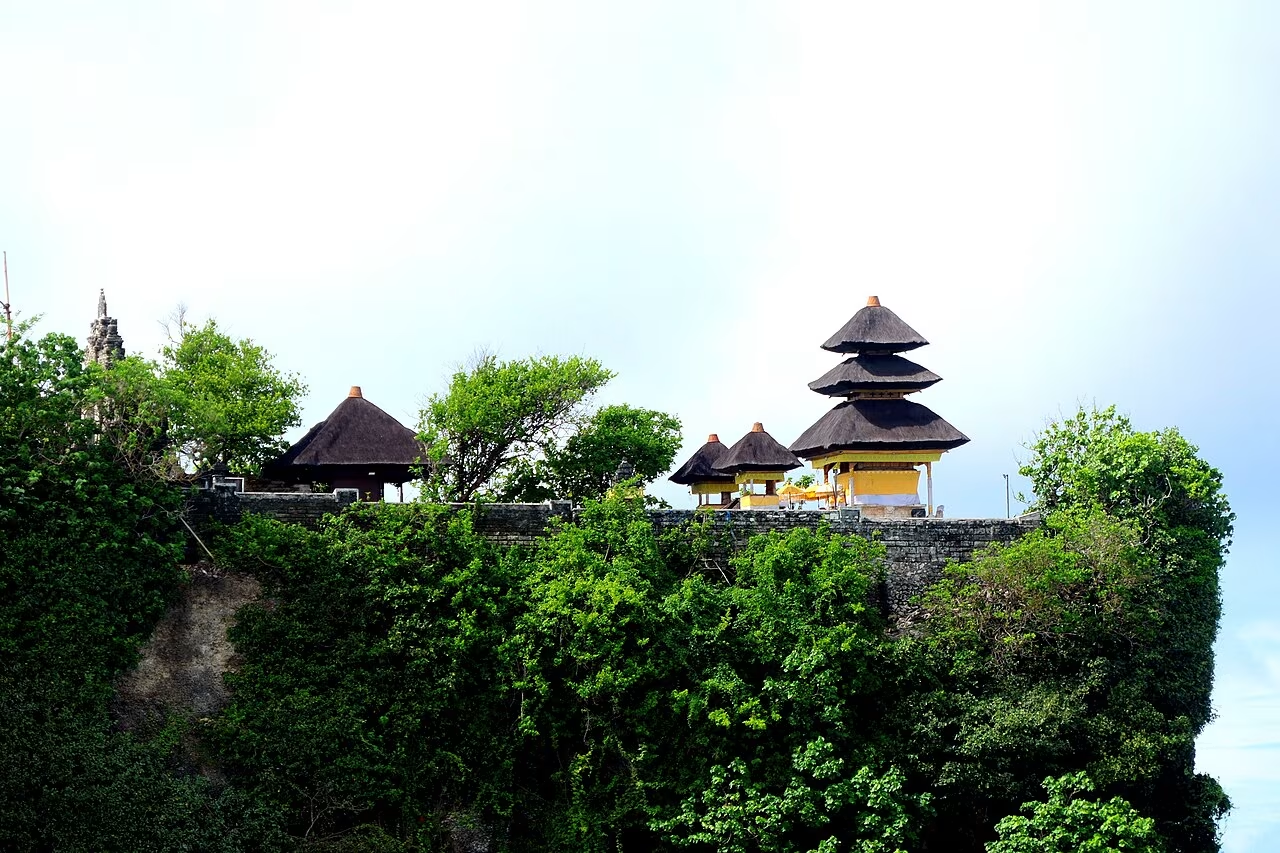
Late afternoon: Pura Uluwatu
Visit Pura Uluwatu with time to walk the clifftop area before sunset. It is an active sacred site. Wear the required temple clothing, follow access rules, and keep loose belongings secured because macaques live around the complex. Stay behind barriers and away from cliff edges.
Pura Uluwatu Bali — gallery image 1
Kecak performance planning
If you want to see a Kecak performance, verify the current session time, ticket arrangement, and admission process directly with the venue or your licensed guide. Popular sunset sessions can fill, while weather or ceremonies may affect operations. Build enough time between arrival, temple walking, sunset, and seating.
Evening: Jimbaran Bay
Finish near Jimbaran Bay. Seafood restaurants line parts of the coast, but menus, minimum orders, taxes, service charges, and table locations vary. Read the menu and confirm prices before ordering. Sunset cannot be guaranteed, yet a meal here works geographically because Jimbaran is closer to the airport than Ubud.
Jimbaran Bay coastline. Image: David Stanley via Wikimedia Commons, CC BY 2.0.
Day 7: Flexible morning and departure
Keep the final day flexible. If your flight is early, go directly to the airport. For an afternoon or evening departure, choose one nearby activity rather than crossing Bali:
A final Sanur beach walk if you stayed in Sanur.
Breakfast and a short stop around Jimbaran if you stayed on the Bukit side.
Kuta Beach or nearby shopping if luggage is securely stored and the airport route is practical.
A spa or long lunch close to the hotel instead of another attraction.
Leave a generous airport buffer. The recommended departure time should be based on airline check-in requirements, international or domestic terminal procedures, weather, and real-time traffic—not on distance alone.
A “Welcome to Kuta Beach” sign near the beach access; photo by Alharomain354 via Wikimedia Commons, CC BY-SA 4.0.
Budget and transport planning
Use our Bali budget travel guide to turn the cost categories below into a realistic daily spending plan.
Main costs to estimate
Accommodation for six nights.
Airport and hotel transfers.
Private-driver days or point-to-point transport.
Attraction, performance, parking, and local access fees.
Nusa Penida fast boat and island transport if selected.
Meals, drinks, tips, shopping, and travel insurance.
Indonesia visa costs when applicable and Bali’s foreign-tourist levy.
Do not build a budget from one advertised headline price. Ask whether fuel, parking, waiting time, tolls, harbour transfer, admission, guide service, meals, child seats, overtime, and return transport are included. Keep digital and offline copies of confirmed arrangements.
Private driver, ride-hailing, scooter, or tours?
A private driver is most useful on Day 3, the Day 4 hotel transfer with a stop, and Day 6. Ride-hailing can suit simple point-to-point journeys where pickup is permitted. Organized tours simplify complex days such as Nusa Penida. Scooter riding should be considered only by properly licensed, experienced riders using legal rentals and helmets; unfamiliar roads, rain, fatigue, and traffic materially increase risk.
Realistic planning windows
Route
Conservative planning window
Main variable
Ngurah Rai Airport to central Ubud
About 1.5–2.5+ hours
Arrival processing, traffic, hotel location
Central Ubud to Tegallalang
About 30–60 minutes
Starting point and congestion
Ubud to Sanur
About 45–90+ minutes
Route, traffic, added stops
Sanur to Nusa Penida by fast boat
About 30–45 minutes at sea
Boat, weather, port operations
Sanur to Uluwatu area
About 1.5–2.5 hours
South Bali traffic
Jimbaran to airport
About 20–60+ minutes
Exact pickup point and traffic
These are itinerary-planning ranges, not live navigation estimates. Check real-time conditions on the day.
How to adapt this Bali itinerary
For families with young children
Remove the Nusa Penida day trip, limit each day to one major outing, and retain pool or nap time. Sanur or Nusa Dua may be easier coastal bases than a nightlife district. Check child-seat availability before booking transport; “family friendly” does not automatically mean a correctly fitted restraint is supplied.
For honeymooners
Keep Ubud but replace one busy sightseeing block with a spa, private meal, or villa afternoon. Choose Jimbaran or Uluwatu for the coastal stay if clifftop atmosphere matters more than Nusa Penida harbour convenience.
For active travellers
Replace the Day 3 viewpoint extension with Mount Batur sunrise trekking, or replace the slower Day 4 stop with rafting. Do not combine a pre-dawn hike, full sightseeing circuit, hotel transfer, and nightlife in the same day.
For travellers with limited mobility
Prioritize vehicle-accessible viewpoints, museums, central cultural sites, Sanur’s flatter beachfront sections, and restaurants with confirmed step-free access. Ask each attraction about current surfaces, ramps, toilets, vehicle drop-off, and assistance; accessibility can vary within the same complex.
During rainy weather
Rain in Bali can be highly localized. Keep museums, galleries, craft workshops, cooking experiences, spas, and flexible meals as alternatives. Avoid assuming waterfalls, cliff paths, river activities, or boat crossings are automatically safe after heavy rain. Follow BMKG forecasts and local operator decisions.
Practical essentials before the trip
Visa and passport
Entry rules depend on nationality and travel purpose. The Ngurah Rai Immigration Office states that eligible Visa on Arrival visitors receive a 30-day stay and may extend it once; the published VoA fee is IDR 500,000. Eligibility and rules can change, so verify them through the Ngurah Rai Immigration Office and Indonesia’s official eVisa domain before departure. Use unofficial visa sites only with extreme caution.
Bali foreign-tourist levy
The official Bali levy is IDR 150,000 per eligible foreign visitor per trip to Bali. Payment and exemption information is available through the provincial government’s Love Bali FAQ. Keep the QR-code voucher accessible and distinguish this levy from any visa fee, attraction ticket, or Nusa Penida charge.
Weather and season
Bali can be visited throughout the year, but rain, humidity, swell, visibility, and crowds change the experience. The Indonesian meteorological agency publishes seasonal information through BMKG. Check the short-term forecast as well as general “dry season” advice, especially before boats, hikes, waterfalls, or sunset-dependent plans.
Respectful behaviour
Bali’s 2025 code of conduct for foreign visitors requires respect for sacred sites, customs, ceremonies, public places, traffic laws, legal accommodation and transport, and the environment. Dress appropriately at temples, never climb sacred structures or trees, do not interrupt ceremonies, and use Indonesian rupiah for transactions. Read the Bali Government Tourism Office summary before travelling.
What to pack for this route
Light, breathable clothing plus a modest temple-ready layer.
Secure walking shoes and sandals with grip.
Reusable water bottle and sun protection.
Compact rain protection and a dry bag for electronics.
Motion-sickness preparation if advised by your clinician for boat travel.
Any essential medication in original packaging.
Offline copies of bookings, passport details, insurance, and emergency contacts.
Frequently asked questions
What is the best seven-day Bali itinerary for first-time visitors?
A balanced first trip uses three nights in Ubud and three nights in one South Bali base. Explore central Ubud, rice terraces and a water temple, transfer south with one stop, choose either Nusa Penida or a relaxed mainland day, then visit Uluwatu and Jimbaran before departure.
Should I stay in Ubud or Seminyak first?
For this route, Ubud first usually works better because the trip begins with inland culture and finishes closer to the airport. Seminyak can replace Sanur if dining and nightlife are more important than convenient Nusa Penida harbour access.
Can I visit Ubud, Canggu, Seminyak, Uluwatu, and Nusa Penida in seven days?
It is physically possible to pass through them, but the result is likely to include frequent packing and heavy traffic. Choose Ubud plus one southern base, then visit other areas selectively.
Is Nusa Penida worth visiting on a seven-day Bali trip?
Yes for travellers who accept an early start, boat crossing, rougher roads, heat, and a long day. Skip it if the group wants a slow holiday, has significant mobility limitations, or faces poor marine conditions.
Do I need a private driver for seven days?
Not necessarily. A practical combination is an airport transfer, private-driver days for dispersed routes, walking in compact centres, and an organized Nusa Penida tour if selected. The right mix depends on group size, luggage, mobility, and preferred flexibility.
How much should I plan to do each day?
One region and two or three meaningful stops is usually enough. A temple, rice terrace, and distant sunset beach may look simple on a map but can become an exhausting day once walking, meals, traffic, and queues are included.
Can this itinerary be customized?
Yes. Use the Bali custom-trip planner to adjust the route for children, honeymoon travel, mobility, photography, temples, food, adventure, or a slower pace.
Final planning advice
The best Bali itinerary is not the one with the most pins. It is the one that gives each place enough time to feel distinct. Begin inland, move south once, keep Nusa Penida optional, and protect the final day from long-distance transfers. That structure creates room for weather, ceremonies, traffic, and spontaneous local discoveries without losing the experiences that brought you to Bali.
Information last researched and verified on 6 September 2026. Operational details, admission arrangements, schedules, weather, traffic, and marine conditions can change. Featured image: Ubud landscape from Bali Saku Raba’s destination media library. In-article image credits and licences appear in each caption.
From private tours to fully custom itineraries — we handle everything so you can focus on the experience. Tell us your dates and we'll take care of the rest.



.jpg "Jimbaran Bay coastline")